Maintaining cleanliness in a church is a matter of aesthetics, health, and respect for the sacred space. Regular cleaning of chairs, pews, and floors ensures a welcoming and hygienic environment for congregants.
Knowing how to clean church chairs and disinfect church pews effectively is as important as utilizing safe and efficient methods. Having the right tools for every type of church furniture is also vital.
Follow our step-by-step guide to keep your church clean and inviting for all who enter.
Why You Should Frequently Clean Church Chairs and Pews
Regularly cleaning and disinfecting church chairs and pews is not just about aesthetics, it’s about fostering a welcoming and hygienic environment. Cleanliness is pivotal in ensuring every visitor experiences a positive first impression.
By adhering to a consistent cleaning routine, you also extend the lifespan of your church furniture, including antique wooden pews.
This preserves the historical significance of these pieces and demonstrates your commitment to maintaining a clean and respectful place of worship.
How to Clean Church Chairs
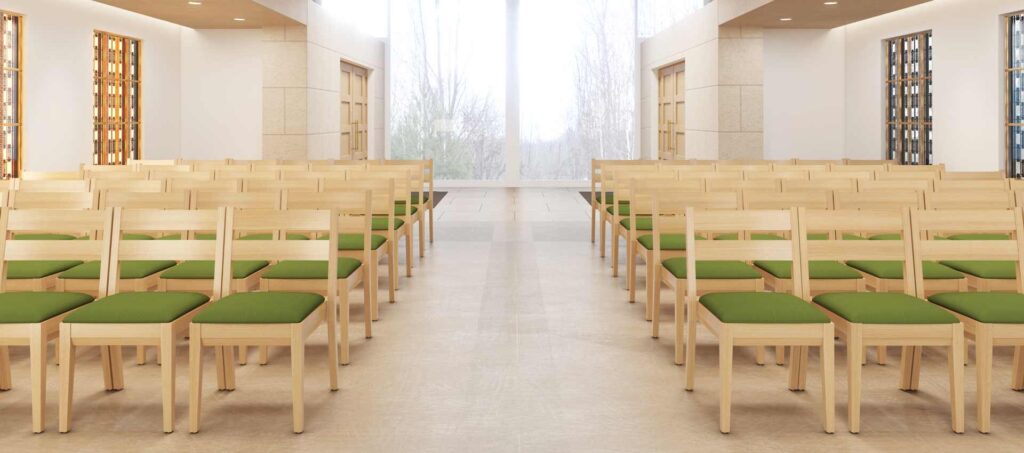
Whether you have upholstered chairs or steel frames, here are step-by-step instructions to ensure your church’s chairs stay clean and well-maintained.
Cleaning Fabric or Upholstery
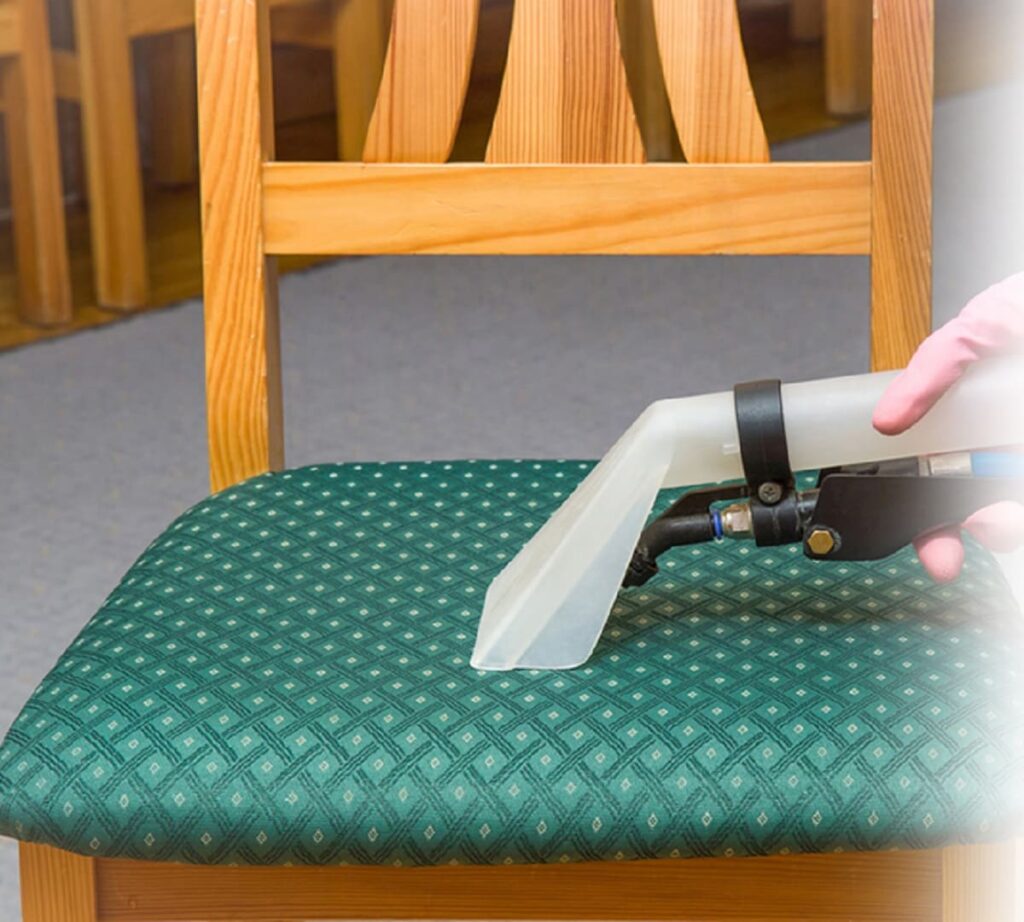
Regular cleaning can easily remove dry or wet dirt from 100% Polyolefin fiber fabrics. In addition to the routine cleaning process for chair fabrics, churches can steam clean their fabrics, which will remove 99.9% of bacteria and restore the fabric. Follow the recommended maintenance steps to clean church chair upholstery:
- Preparation: Vacuum the chairs to remove loose dirt and debris. This step prevents dirt from embedding into the fabric during cleaning.
- Spot Cleaning: Treat any visible stains with a water-based upholstery cleaning spray. For chairs marked W or WS, blot with cold water to lift stains without using too much water. For S-marked chairs, apply solvent-based cleaners and gently brush the area after spot testing.
- General Cleaning: Mix a mild detergent with water to create a cleaning solution and disinfect church pews. Dampen a clean cloth with the solution and gently blot the fabric, working from outside the stain toward the center. Avoid over-wetting the fabric.
- Rinse: Use a clean, damp cloth to remove the detergent residue. Allow the chairs to air dry completely.
Cleaning Steel Chair Frames
This cleaning procedure is straightforward for steel chairs. However, always avoid harsh cleaning agents. Follow these steps to properly clean steel frames:
- Dusting: Begin by dusting the chair frames with a soft cloth or duster to remove any surface dust.
- Cleaning: Prepare a mixture of mild dish soap and warm water. Dip a cloth into the solution and gently wipe down the steel frames to remove dirt or grime.
- Rinse and Dry: Wipe the frames with a damp cloth to remove soap residue, and then dry them thoroughly with a clean, dry cloth.
How to Clean Church Pews
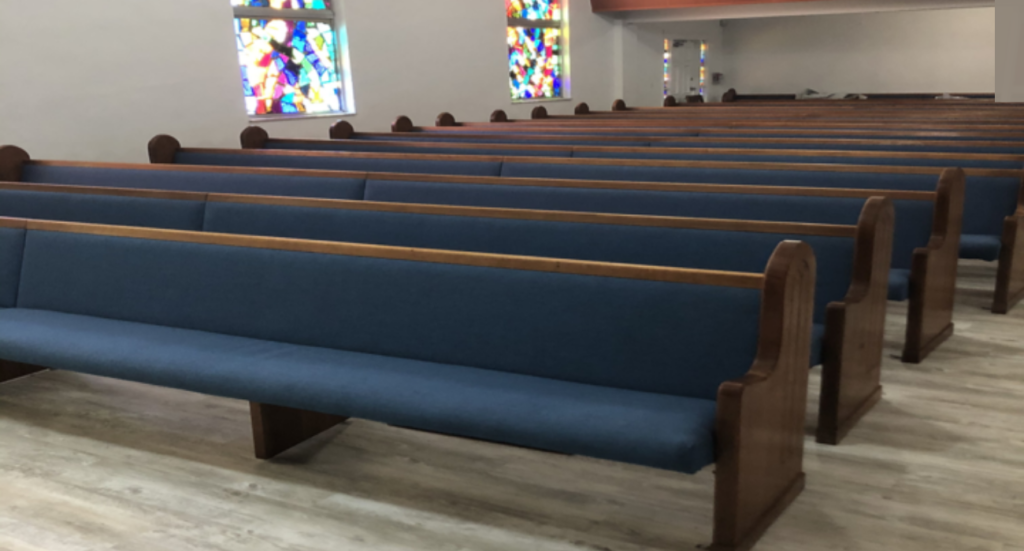
Cleaning antique wooden church pews is paramount in maintaining a safe and healthy environment for worshipers. Here’s how to clean pews made from various materials:
How to Clean a Wooden Church Pews
- Dust Removal: Begin by dusting the pews with a soft cloth or duster to eliminate surface dust.
- Gentle Cleaning: Mix a mild wood cleaner with water or use solvent-based cleaners. Then, dampen a cloth with the solution. Wipe down the wooden surface, paying attention to intricate details. Avoid excessive moisture to prevent damage.
- Rinse and Dry: Use a clean, damp cloth to remove any cleaning residue, followed by a dry cloth to ensure thorough drying.
How to Clean Metal or Upholstered Church Pews
- Preparation: Vacuum upholstered pews to remove loose dirt. For metal pews, dust them with a cloth or duster.
- Disinfecting Church Pews: Apply a disinfecting solution suitable for the material. Follow the product instructions for effective sanitization.
- Rinse and Dry: Wipe the pews with a damp cloth to remove any disinfectant residue, and then ensure they are dehydrated.
Follow Our Comprehensive Cleaning Checklist for Churches
Having a handy checklist will help you maintain an organized cleaning routine, ensuring your place of worship is inviting and safe for all congregants.
Furniture (Chairs/Pews)
- Church Chairs: Regularly vacuum and clean upholstered chairs. Disinfect them to prevent the spread of germs.
- Church Pews: Clean and disinfect pews, considering their material (wood, metal, or upholstered).
Floors and Carpets
- Floor Surfaces: Sweep and mop hard floors and vacuum carpets. Pay attention to high-traffic areas.
- Carpet Cleaning: Schedule periodic deep cleaning to remove embedded dirt and stains.
Windows and Glass
- Window Cleaning: Clear windows and glass doors with glass cleaner for a bright and welcoming atmosphere.
- Glass Fixtures: Wipe down glass fixtures and frames with cleaners and microfiber cloths for a polished look.
Restrooms
- Sanitization: Thoroughly clean and disinfect restrooms, including sinks, toilets, and fixtures.
- Restock Supplies: Ensure a constant supply of soap, paper towels, and toilet paper.
Tips for Maintenance and Long-Term Care
Ensuring the longevity of your church furniture requires ongoing maintenance and care. Here are some valuable tips to keep your pieces in tip-top condition:
- Regular Cleaning: Stick to a routine cleaning schedule to prevent dirt buildup and maintain a clean appearance.
- Immediate Stain Treatment: Address spills and stains promptly to avoid permanent damage.
- Proper Storage: Store and cover extra chairs and pews in a dry and clean area to prevent moisture damage when not in use.
- Rotate Seating: To distribute wear and tear evenly, periodically rotate chairs and cushions.
- Inspect and Repair: Regularly inspect furniture for loose screws, broken parts, or fabric damage, and repair as needed.
- Upholstery Protection: Consider applying fabric protectors to upholstered chairs to prevent stains.
- Professional Cleaning: Schedule professional upholstery cleaning and maintenance for a deeper clean.
Maintain Your Church with Our Professional Cleaning Services
A clean church environment enhances the aesthetics and fosters a hygienic and welcoming atmosphere for congregants.
From step-by-step cleaning guides to following a checklist on how to clean a church, we’ve provided the knowledge needed to ensure your place of worship remains a spiritual haven.
To take the first step toward elevated church cleanliness, consider Dallas Janitorial’s church cleaning services.
Our expertise will help you maintain a space that truly reflects the reverence and respect your congregation deserves. Contact us to learn how our team of professional cleaners can help you clean and upkeep your worship space.
Frequently Asked Questions About Church Cleaning
How do you clean fabric on chairs?
Start by vacuuming the fabric to remove loose dirt and dust. Treat any visible stains with a water-based upholstery cleaning spray.
Create a mixture of mild detergent and water, dampen a cloth with the solution, and gently blot the fabric, working from outside the stain toward the center. Avoid over-wetting the fabric. Wipe the detergent residue away with a clean, damp cloth, and let the chairs air dry completely.
Does baking soda clean fabric chairs?
Baking soda can help clean fabric chairs as a natural deodorizer and stain remover. Simply sprinkle baking soda over the fabric, let it sit for about 15 minutes, then vacuum it up.
What home remedy can you use to clean chairs?
Mix equal parts white vinegar and water for a simple home remedy to clean chairs. Dampen a cloth with the solution and gently wipe the chair’s surface. Vinegar effectively cuts through grease and grime while being gentle on most chair materials.
How do you clean church pew cushions?
Cleaning church pew cushions is essential for hygiene. Start by vacuuming the cushions to remove loose debris. Mix a mild detergent with water, and use a cloth dampened with the solution to clean the cushions gently.
You can also use solvent-based cleaners. Rinse with a clean, damp cloth to remove detergent residue, and allow the cushions to air dry completely before using them again.
How to clean church chair stains?
To remove stains from church chairs, paste baking soda and water. Apply the paste to the stain, gently rub it in, and let it sit for about 15 minutes. Then, wipe away the paste with a clean, damp cloth.