Who is responsible for disinfecting and decontaminating workspaces to protect employee health and public safety? Employers hold ultimate responsibility under OSHA regulations to provide safe work environments through proper disinfection protocols. Professional disinfecting services deliver the specialized knowledge and equipment required to achieve consistent pathogen elimination across commercial facilities.
Who Is Responsible for Disinfecting and Decontaminating?
Who is responsible for disinfecting and decontaminating commercial workspaces under current regulations? The Occupational Safety and Health Administration requires employers to maintain safe and healthful work environments for staff and visitors. This legal obligation encompasses environmental surface disinfection, contamination prevention, and pathogen elimination protocols. Responsibility is typically distributed across multiple parties, including facility management, in-house cleaning staff, and professional disinfecting services, depending on facility type and contamination risks.
Employers bear primary accountability for establishing disinfection policies, allocating resources, and ensuring protocol compliance. While employers rarely perform cleaning tasks directly, they must create systematic programs addressing contamination risks. This includes determining appropriate disinfection frequency, selecting qualified cleaning personnel, providing necessary equipment and chemicals, and implementing quality verification systems.
In-house cleaning staff execute routine disinfection tasks following established protocols and schedules. These workers perform daily surface cleaning, high-touch point disinfection, and immediate response to visible contamination. However, research demonstrates inconsistent results from manual cleaning approaches; hospital studies show only 40-50% of required surfaces receive adequate disinfection from in-house staff alone. Training limitations, time constraints, and competing priorities often compromise cleaning thoroughness.
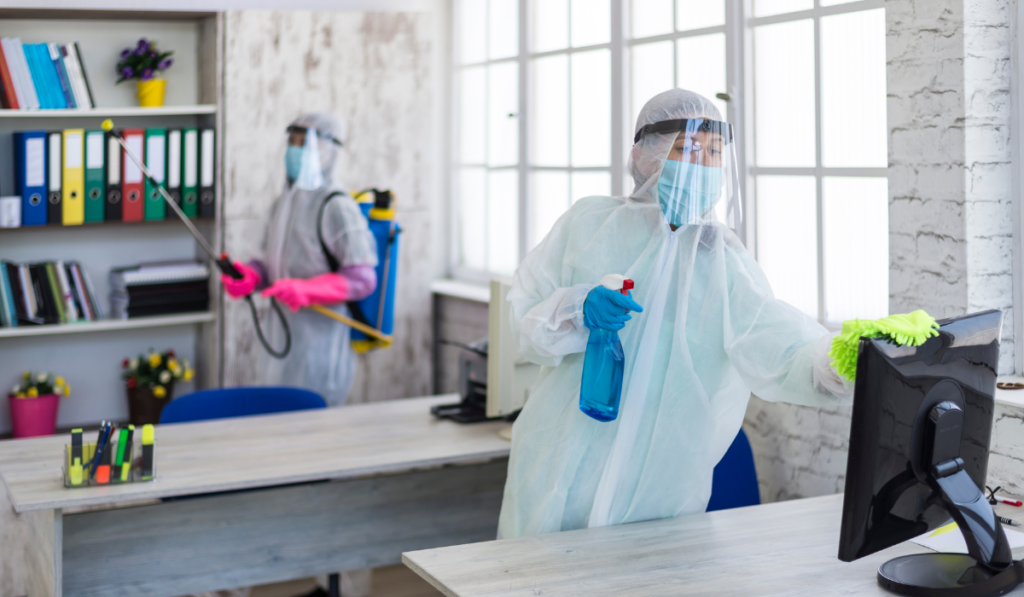
Professional disinfecting services provide specialized expertise exceeding typical in-house capabilities. These companies employ trained technicians certified in pathogen elimination, chemical disinfectant application, and regulatory compliance protocols. Professional services maintain commercial-grade equipment, including electrostatic sprayers, foggers, and verification systems, ensuring comprehensive contamination elimination. The COVID-19 pandemic heightened awareness that effective disinfection requires specialized knowledge to prevent disease transmission.
Understanding Disinfection vs Decontamination
Many people use “disinfection” and “decontamination” interchangeably despite these terms describing distinct cleaning processes. Understanding these differences helps organizations select appropriate methods for specific contamination scenarios, ensuring effective pathogen elimination while avoiding unnecessary procedures.
Disinfection eliminates most disease-causing pathogens from environmental surfaces but does not destroy all microorganisms. The disinfection process begins with cleaning surfaces using detergent solutions, removing visible soil and organic matter. After cleaning, chemical disinfectants kill bacteria and viruses through protein denaturation and cellular membrane disruption. Common disinfectants include chlorine-releasing agents, quaternary ammonium compounds, and hydrogen peroxide solutions.
However, disinfection does not eliminate bacterial spores, which resist chemical agents requiring more intensive sterilization processes. Despite this limitation, disinfection effectively destroys enveloped viruses, including SARS-CoV-2, influenza, and respiratory syncytial virus. Following disinfectant application, many surfaces require rinsing to prevent material corrosion from chemical residues. Different surface materials and contamination types demand specific disinfectant selection and contact time requirements.
Decontamination represents a broader term encompassing all processes that remove microbial presence from environmental surfaces. Decontamination procedures range from simple cleaning to complete sterilization, depending on contamination severity and infection risks. Healthcare facilities and laboratories use decontamination protocols to prevent pathogen exposure from medical equipment, laboratory specimens, and patient care areas.
Key distinctions between disinfection and decontamination include:
- Scope: Disinfection targets specific pathogens on surfaces; decontamination addresses all microbial presence across entire environments, including air, equipment, and structural elements.
- Methods: Disinfection employs chemical agents with defined contact times; decontamination may include physical removal, chemical treatment, sterilization, or environmental controls.
- Application: Disinfection suits routine maintenance and preventive cleaning; decontamination responds to confirmed contamination events or high-risk exposures.
- Outcomes: Disinfection achieves pathogen reduction to safe levels; decontamination seeks complete microbial elimination from contaminated areas.
- Verification: Disinfection relies on proper chemical application and contact times; decontamination requires environmental testing confirming microbial elimination.
These process distinctions guide facility managers in selecting appropriate cleaning protocols matching contamination risks and regulatory requirements.
Why Disinfection and Decontamination Responsibility Matters
Clear accountability structures ensure consistent implementation of disinfection protocols, protecting workers and customers from infectious disease transmission. The COVID-19 pandemic demonstrated how rapidly pathogens spread through contaminated environmental surfaces; SARS-CoV-2 remains viable on surfaces for hours to days, depending on material composition and environmental conditions. Without defined responsibility, contamination control becomes inconsistent, creating infection transmission pathways.
Regulatory compliance requires documented disinfection responsibility and verification systems. OSHA mandates that employers protect workers from occupational hazards, including infectious disease exposure. Failure to maintain appropriate disinfection protocols results in citations, penalties, and potential facility closures. Beyond legal requirements, inadequate disinfection damages business reputations as customers avoid establishments perceived as unsanitary.
Critical benefits of defined disinfection responsibility include:
- Regulatory Compliance: Clear accountability ensures OSHA requirements are met through documented policies, training programs, and quality verification, protecting facilities from citations and penalties.
- Infection Prevention: Systematic disinfection protocols reduce pathogen transmission between occupants, decreasing illness-related absenteeism and productivity losses from workplace outbreaks.
- Liability Protection: Documented cleaning schedules and quality assurance systems reduce legal exposure from infectious disease claims, demonstrating reasonable care in contamination prevention.
- Customer Confidence: Visible commitment to cleanliness builds trust with customers and clients who increasingly prioritize sanitation when selecting service providers and venues.
- Operational Continuity: Preventing disease outbreaks avoids costly facility shutdowns, quarantine requirements, and business disruption from mass worker illness events.
These interconnected advantages demonstrate why disinfection responsibility extends beyond basic housekeeping to become critical risk management infrastructure.
COVID-19 Impact on Disinfection Standards
The COVID-19 pandemic fundamentally transformed disinfection expectations and requirements across all industries. Before 2020, many facilities maintained minimal cleaning schedules focused on visible cleanliness rather than pathogen elimination. The rapid global spread of SARS-CoV-2 forced businesses to implement rigorous disinfection protocols, preventing viral transmission through environmental contamination.
During the early pandemic stages, the CDC and state governments established strict disinfection guidelines for businesses to remain operational. These requirements included multiple daily high-touch surface disinfections, enhanced cleaning between customer visits, and immediate response protocols following confirmed COVID-19 exposure. Surface transmission concerns drove increased disinfection frequency as research demonstrated viral viability on common surfaces for extended periods.
Many pandemic-era disinfection policies remain in effect as businesses recognize ongoing benefits beyond COVID-19 prevention. Enhanced cleaning protocols address seasonal influenza, norovirus outbreaks, and emerging infectious diseases. Customers now expect visible sanitation measures, including hand sanitizer stations, frequent surface disinfection, and professional cleaning services. Businesses failing to maintain elevated cleanliness standards risk customer loss to competitors demonstrating stronger hygiene commitments.
The following table compares pre-pandemic and current disinfection standards:
| Aspect | Pre-Pandemic Standards | Current Standards | Change Impact |
| High-touch surface frequency | Daily or as-needed | Multiple times daily | 3-5x frequency increase |
| Professional service usage | Monthly to quarterly | Weekly to multiple weekly | 4-8x service increase |
| Disinfectant selection | General cleaners | EPA-registered pathogen-specific | Enhanced efficacy requirements |
| Staff training | Basic cleaning procedures | Bloodborne pathogen certification | Regulatory compliance focus |
| Verification methods | Visual inspection only | ATP testing, environmental cultures | Objective contamination measurement |
These elevated standards represent permanent shifts in disinfection expectations requiring sustained resource allocation and professional expertise.
Professional disinfection services gained prominence during the pandemic as businesses recognized in-house staff limitations. Complex disinfection protocols, specialized equipment requirements, and regulatory compliance demands exceed typical janitorial capabilities. Organizations discovered that professional services deliver consistent results while allowing in-house staff to focus on core operational responsibilities.
Employer Disinfection Responsibilities
Employers hold primary legal and practical responsibility for workplace disinfection under OSHA regulations and common law duty of care principles. This accountability cannot be delegated despite outsourcing actual cleaning tasks to professional services. Employers must establish comprehensive disinfection programs addressing facility-specific contamination risks and regulatory requirements.
Policy development forms the foundation of employer disinfection responsibility. Organizations must create written protocols documenting cleaning frequencies, responsible parties, disinfectant specifications, and quality verification procedures. These policies should address routine maintenance, disinfection, and outbreak response protocols. Policies require regular updates reflecting emerging pathogens, regulatory changes, and facility modifications affecting contamination risks.
Resource allocation demonstrates employer commitment to maintaining safe work environments. Adequate budgets must support professional cleaning services, chemical disinfectant supplies, personal protective equipment, and staff training programs. Employers cannot claim compliance while failing to provide the resources necessary for effective disinfection protocol implementation.
Essential employer disinfection responsibilities include:
- Risk Assessment: Evaluate facility contamination risks based on occupancy levels, visitor traffic, surface types, and local disease prevalence, determining appropriate disinfection intensity.
- Policy Establishment: Develop written disinfection protocols specifying cleaning frequencies, responsible parties, chemical specifications, and quality verification procedures meeting regulatory requirements.
- Service Selection: Choose qualified cleaning providers or train in-house staff, ensuring personnel possess the knowledge and equipment necessary for effective pathogen elimination.
- Quality Oversight: Implement verification systems, including inspection schedules, ATP testing, and environmental cultures confirming disinfection effectiveness across all facility areas.
- Incident Response: Establish protocols for responding to confirmed infectious disease exposure, including immediate decontamination, notification procedures, and prevention of secondary transmission.
- Documentation: Maintain records of cleaning schedules, service completion, quality verification results, and incident responses, creating audit trails demonstrating compliance.
These systematic responsibilities ensure employer accountability for workplace disinfection effectiveness regardless of whether cleaning tasks are performed in-house or outsourced.
Staff training represents another critical employer responsibility. Workers must understand proper disinfectant application techniques, required contact times, personal protective equipment usage, and health hazards from chemical exposure. Training programs should include hands-on practice with supervision, ensuring competency before independent work assignments. Regular refresher training addresses new pathogens, updated protocols, and performance improvement needs.
In-House Cleaning Staff Responsibilities
In-house cleaning personnel execute daily disinfection tasks following established protocols and schedules. These workers form the front line of contamination control through consistent attention to environmental surfaces and immediate response to contamination events. However, in-house staff effectiveness depends on adequate training, appropriate equipment access, and realistic workload expectations.
High-touch surface disinfection represents the primary in-house cleaning responsibility. Frequently contacted surfaces, including door handles, light switches, elevator buttons, handrails, and shared equipment, require multiple daily disinfections. In-house staff must apply appropriate disinfectants following manufacturer contact time specifications, ensuring adequate pathogen elimination. Surface preparation through cleaning removes organic matter that interferes with disinfectant effectiveness.
Routine area maintenance keeps facilities consistently clean between professional deep cleaning services. In-house staff perform daily floor cleaning, restroom sanitization, common area tidying, and waste removal. These tasks prevent contamination accumulation, requiring intensive remediation while maintaining acceptable appearance standards. Consistent daily attention proves more effective than sporadic intensive cleaning sessions.
Critical in-house cleaning staff duties include:
- Daily Disinfection: Clean and disinfect high-touch surfaces multiple times daily using appropriate chemical agents and contact times, preventing pathogen accumulation and transmission.
- Immediate Response: Address visible contamination, including spills, body fluids, and waste, within 30 minutes, preventing pathogen spread and cross-contamination to clean areas.
- Supply Management: Monitor disinfectant inventory, equipment functionality, and personal protective equipment stocks, requesting replacements before depletion to prevent cleaning interruptions.
- Quality Documentation: Complete cleaning checklists, time logs, and incident reports, creating records demonstrating protocol compliance and identifying improvement opportunities.
- Communication: Report equipment failures, supply shortages, unusual contamination, or protocol concerns to supervisors, enabling timely response and resource allocation.
These responsibilities require adequate staffing levels, reasonable workload expectations, and management support, ensuring that in-house staff can meet performance standards.
Training limitations often constrain in-house staff effectiveness compared to professional services. Many organizations provide minimal cleaning instruction, assuming tasks are self-evident. However, proper disinfection requires understanding pathogen transmission, chemical selection, contact time requirements, and cross-contamination prevention. Without specialized training, in-house staff may apply incorrect products, use inadequate contact times, or inadvertently spread contamination between areas.
Equipment access further limits in-house capabilities. Professional services maintain commercial-grade equipment, including electrostatic sprayers, foggers, floor scrubbers, and verification systems that individual facilities cannot economically justify. In-house staff typically work with basic supplies, limiting disinfection thoroughness and efficiency. For comprehensive pathogen elimination, organizations should supplement in-house maintenance with periodic professional services.
Professional Disinfecting Service Responsibilities
Professional disinfecting services provide specialized expertise and equipment, delivering consistent pathogen elimination across commercial facilities. These companies employ trained technicians certified in infection control protocols, chemical disinfectant application, and regulatory compliance requirements. Professional services excel at intensive decontamination tasks exceeding in-house staff capabilities and routine maintenance needs.
Deep cleaning and decontamination represent core professional service strengths. These intensive procedures address contamination accumulation in difficult-to-reach areas, porous materials, and complex equipment that routine cleaning cannot adequately treat. Professional services use commercial-grade equipment, including electrostatic sprayers distributing disinfectant uniformly across surfaces and foggers treating entire room volumes simultaneously. Advanced technologies ensure comprehensive coverage, preventing pathogen reservoirs that manual cleaning misses.
Terminal cleaning following infectious disease outbreaks requires professional service expertise. This intensive disinfection process treats all environmental surfaces, including walls, ceilings, floors, furniture, and equipment, after confirmed contamination events. Terminal cleaning prevents secondary transmission to subsequent occupants while meeting regulatory requirements for facility reopening. The detailed, methodical approach necessary for terminal cleaning demands specialized training and supervision, ensuring no surfaces are overlooked.
Key professional disinfecting service capabilities include:
- Specialized Training: Technicians complete bloodborne pathogen certification, infection control courses, and product-specific training, ensuring proper disinfection technique application and safety protocol compliance.
- Advanced Equipment: Services invest in electrostatic sprayers, ULV foggers, HEPA vacuums, and ATP testing devices that individual facilities cannot economically maintain, providing superior disinfection outcomes.
- EPA-Registered Chemicals: Professional services access hospital-grade disinfectants meeting EPA efficacy standards against specific pathogens, including emerging infectious diseases and antibiotic-resistant organisms.
- Quality Verification: Services perform ATP testing, environmental cultures, and photographic documentation, objectively confirming disinfection effectiveness rather than relying on visual inspection alone.
- Regulatory Knowledge: Professional services maintain current understanding of OSHA standards, CDC guidelines, and state health department requirements, ensuring client facility compliance.
- Rapid Response: Services provide emergency decontamination following outbreak notifications, deploying teams within hours to prevent disease spread and facilitate safe facility reopening.
These comprehensive capabilities explain why organizations increasingly rely on professional services for disinfection tasks critical to health and safety.
Professional services also provide objective third-party verification, valuable for liability protection and customer assurance. Independent quality documentation demonstrates reasonable care in contamination prevention, supporting legal defense if disease transmission claims arise. Customer-facing businesses leverage professional service credentials in marketing communications, building trust with health-conscious consumers.

Area-Specific Disinfection Requirements
Different facility areas present unique contamination risks requiring tailored disinfection protocols, frequencies, and responsible parties. Understanding these distinctions ensures appropriate resource allocation and protocol development matching actual transmission risks.
Restrooms require intensive disinfection due to fecal-oral pathogen transmission risks and concentrated user traffic. Public restrooms in commercial facilities need cleaning and disinfection at a minimum once daily; high-traffic locations like restaurants require multiple daily cleaning cycles. High-touch surfaces, including faucets, flush handles, toilet seats, door hardware, and dispensers, accumulate pathogens rapidly, demanding frequent attention.
In-house staff typically handle routine restroom disinfection while professional services perform periodic deep cleaning. The combination approach maintains baseline cleanliness through daily attention while addressing biofilm accumulation, drain contamination, and grout disinfection that routine cleaning cannot achieve. Professional services use specialized equipment to treat surfaces, fixtures, and air systems comprehensively.
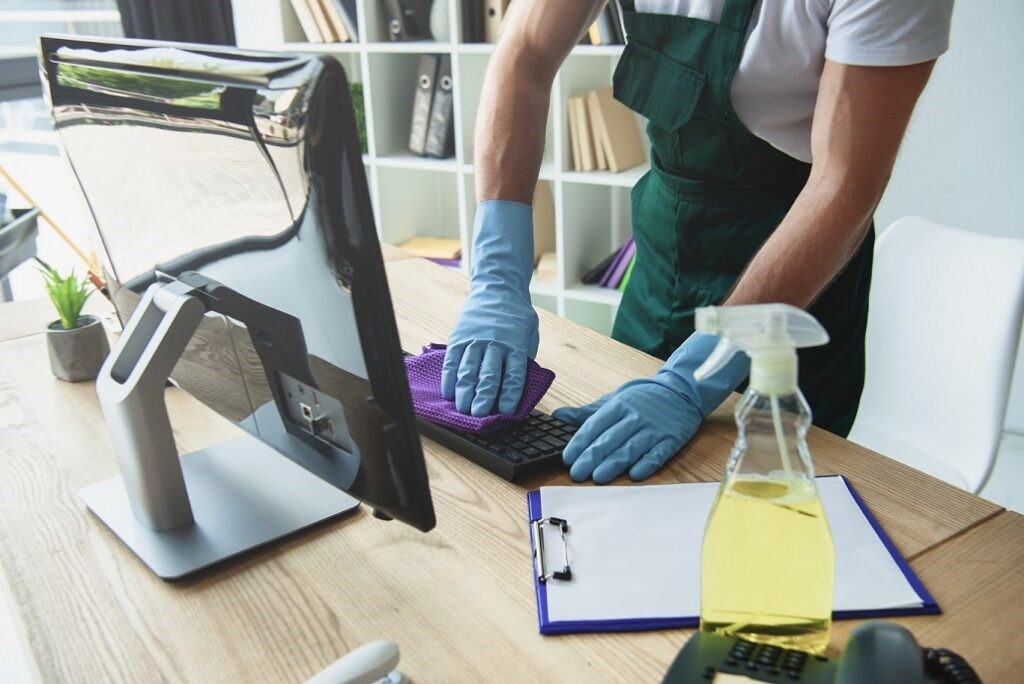
Office spaces present varied disinfection challenges depending on occupancy density, equipment types, and work processes. Individual offices with single occupants require less intensive disinfection than shared workspaces with multiple users. High-touch surfaces, including keyboards, mice, phones, door handles, and shared equipment, need daily disinfection by either occupants or cleaning staff.
Office area disinfection protocols include:
- Individual Workstations: Occupants wipe down keyboards, mice, phones, and desk surfaces daily using provided disinfectant wipes or sprays, maintaining personal workspace hygiene.
- Shared Spaces: In-house staff disinfect conference rooms, break rooms, and common areas daily, focusing on tables, chairs, appliances, and door hardware, preventing cross-contamination.
- Deep Cleaning: Professional services perform weekly or monthly intensive cleaning, addressing carpet extraction, upholstery treatment, and difficult-to-reach areas, supplementing daily maintenance.
- Outbreak Response: Following confirmed illness cases, professional services conduct immediate terminal cleaning of affected areas, preventing secondary transmission to coworkers.
These layered approaches balance cost-effectiveness with infection prevention needs, ensuring appropriate disinfection intensity matching actual contamination risks.
Common areas, including break rooms, cafeterias, lobbies, and waiting rooms, experience high traffic and diverse user populations, creating elevated contamination risks. These spaces require multiple daily disinfection cycles during peak usage periods. Shared equipment like coffee makers, microwaves, refrigerators, and vending machines needs attention between uses when possible.
Reception areas and waiting rooms present particular challenges in healthcare, hospitality, and professional service settings. Sick individuals may contaminate surfaces before receiving care, creating transmission risks to subsequent visitors. Enhanced disinfection frequency and immediate response to visible contamination prove essential in these high-risk areas. Professional services often schedule daily service in high-traffic public spaces, supplementing in-house maintenance efforts.
Variation by Facility Type
Who is responsible for disinfecting and decontaminating varies significantly across facility types based on regulatory requirements, contamination risks, and operational characteristics. Understanding these distinctions ensures appropriate responsibility allocation and protocol development.
Healthcare Facilities: Maintain the most stringent disinfection requirements due to vulnerable patient populations and confirmed pathogen presence. Hospitals employ dedicated environmental services departments responsible for routine cleaning and disinfection following strict protocols. Professional services provide terminal cleaning after discharge of infectious patients, outbreak response, and specialized decontamination procedures. Regulatory oversight from health departments and accreditation organizations enforces consistent protocol compliance. Responsibility extends to medical equipment disinfection, operating room sterilization, and isolation room decontamination, requiring specialized training and certification.
Food Service Establishments: Face unique disinfection requirements combining food safety regulations with general pathogen control. Operators bear direct responsibility for food contact surface sanitization following health department specifications. In-house staff perform continuous cleaning and sanitizing during operations, while professional services conduct periodic deep cleaning of kitchens, dining areas, and restrooms. Food service regulations mandate specific sanitizer concentrations, contact times, and verification methods, ensuring proper pathogen elimination. Failure to maintain standards results in health department citations and potential closure.
Office Buildings: Distribute responsibility between property management, tenant organizations, and cleaning contractors. Building management typically contracts professional services for common area cleaning, including lobbies, elevators, restrooms, and corridors. Individual tenants remain responsible for office space disinfection either through in-house staff or separate service contracts. Responsibility clarity becomes essential in multi-tenant buildings, preventing gaps in coverage between managed and tenant spaces.
Educational Facilities: Place primary responsibility on school districts and administrators who must protect student and staff health. In-house custodial staff perform daily cleaning and disinfection following district protocols. Professional services supplement in-house efforts during breaks, following illness outbreaks, and for specialized tasks like floor refinishing. The COVID-19 pandemic elevated cleaning standards in schools with enhanced disinfection frequency and professional service utilization, protecting vulnerable student populations.
Retail and Hospitality: Bear direct customer-facing responsibility for visible cleanliness and pathogen control. These businesses typically employ in-house staff for continuous cleaning during operational hours, combined with professional services for intensive overnight or early morning disinfection. Customer expectations for sanitation increased dramatically following COVID-19, with visible cleaning becoming a competitive differentiator. Responsibility extends to frequent high-touch surface disinfection, restroom maintenance, and immediate contamination response during business hours.
Each facility type demands customized responsibility structures matching regulatory requirements, contamination risks, and operational patterns, ensuring effective disinfection protocol implementation.
Terminal Cleaning and Professional Service Requirements
Terminal cleaning represents the most intensive disinfection level, requiring professional service expertise and specialized equipment. This comprehensive decontamination process treats all environmental surfaces following confirmed infectious disease exposure or high-risk contamination events. Terminal cleaning differs from routine maintenance by addressing total pathogen elimination rather than contamination reduction.
Healthcare facilities most commonly require terminal cleaning following patient discharge from isolation rooms or after confirmed healthcare-associated infection outbreaks. The process includes ceiling-to-floor disinfection of all surfaces, furniture, equipment, and fixtures. Professional services dismantle and clean medical equipment, treat HVAC systems, and disinfect behind and underneath immobile fixtures. Terminal cleaning may require facility area closure for hours to days, ensuring proper disinfectant contact times and air quality restoration.
Laboratory and research facilities need terminal cleaning after biohazardous material spills or following experiments with infectious agents. These specialized decontamination procedures follow biosafety protocols appropriate for containment levels. Professional services certified in biohazardous material handling conduct systematic decontamination using EPA-registered disinfectants effective against specific organisms. Documentation requirements exceed standard cleaning records, creating audit trails for regulatory inspections.
Terminal cleaning process components include:
- Surface Preparation: Remove all portable items, strip beds, and clear surfaces, allowing comprehensive access to walls, floors, ceilings, and fixtures requiring disinfection.
- High-Touch Disinfection: Treat all high-contact surfaces, including bed rails, overbed tables, call buttons, door handles, light switches, and medical equipment, using appropriate contact times.
- Comprehensive Coverage: Disinfect walls, windows, window sills, ledges, vents, light fixtures, and ceiling surfaces using extended-reach equipment and proper disinfectant application.
- Floor Treatment: Perform intensive floor cleaning, including baseboards, corners, and areas beneath furniture, using commercial floor scrubbers and EPA-registered disinfectants.
- Equipment Decontamination: Remove and separately disinfect all mobile equipment, monitors, IV poles, and furniture, preventing cross-contamination during room cleaning.
- Verification Testing: Conduct ATP testing, environmental cultures, or fluorescent marker assessment confirming adequate disinfection before room reoccupancy.
These systematic procedures require hours per room compared to minutes for routine cleaning, justifying professional service engagement for terminal cleaning needs.
Professional services maintain the heavy-duty equipment essential for terminal cleaning effectiveness. This includes commercial-grade foggers treating entire room volumes, electrostatic sprayers ensuring complete surface coverage, and HEPA vacuums capturing disturbed pathogens during cleaning. Personal protective equipment, including respirators, full-body suits, and eye protection, protects workers from chemical exposure and pathogen contact during intensive decontamination.
Get Professional Disinfecting and Decontaminating Services from Dallas Janitorial Services
Who is responsible for disinfecting and decontaminating ultimately depends on facility type and contamination risks; however, professional services ensure consistent, effective results. Clear accountability structures prevent gaps in coverage while professional expertise delivers pathogen elimination exceeding in-house capabilities. Dallas Janitorial Services brings over 15 years of commercial disinfection expertise to Dallas-Fort Worth businesses across all industries. Contact us today at 214-778-3689 for customized disinfection responsibility assessment and service planning.
Frequently Asked Questions About Disinfection and Decontamination Responsibility
Who is responsible for disinfecting and decontaminating in workplace settings?
Employers hold primary legal responsibility under OSHA regulations to provide safe work environments through proper disinfection protocols. Actual cleaning tasks are distributed among in-house staff for routine maintenance and professional services for intensive decontamination. Employers must establish policies, allocate resources, and verify protocol compliance regardless of whether cleaning is performed in-house or outsourced to professional services.
Who is responsible for disinfecting medical equipment in healthcare facilities?
Central sterile processing departments bear responsibility for medical equipment decontamination and sterilization following strict regulatory protocols. Trained sterile processing technicians perform cleaning, disinfection, or sterilization based on equipment classification and infection risk levels. Some healthcare facilities contract professional services for terminal cleaning following infectious patient discharge while maintaining in-house staff for routine equipment processing.
What is the difference between disinfecting and decontaminating responsibility?
Disinfection responsibility involves routine pathogen reduction on environmental surfaces using chemical agents, eliminating most disease-causing microorganisms. Decontamination responsibility encompasses broader contamination removal, including complete microbial elimination from high-risk areas following confirmed exposure events. Decontamination typically requires professional service expertise, while routine disinfection may be performed by in-house staff following proper training.
Who is responsible for disinfecting public restrooms in commercial buildings?
Building management or property owners bear ultimate responsibility for public restroom disinfection in commercial facilities. In-house custodial staff typically perform daily cleaning and disinfection, while professional services conduct periodic deep cleaning. Responsibility must be clearly defined in lease agreements for multi-tenant buildings, preventing gaps in coverage between common area and tenant space maintenance.
What qualifications should professional disinfecting services possess?
Professional disinfecting services should employ technicians with bloodborne pathogen certification, infection control training, and chemical safety credentials. Services should maintain comprehensive liability insurance, use EPA-registered hospital-grade disinfectants, and provide objective quality verification through ATP testing or environmental cultures. Experience in relevant industries, understanding of facility-specific regulations, and emergency response capabilities represent additional important qualifications when selecting professional services.