Small, medium, and large businesses operating in the Dallas-Ft. Worth areas often require more types of industrial cleaning services that go beyond a couple of rags and some off-the-shelf cleaners.
We’re talking about office spaces, restaurants, warehouses, manufacturing facilities, food processing plants, schools, and a whole lot more.
We’re also talking about the fact of protecting hundreds and thousands of people working inside those buildings. In the wake of dealing with an intense pandemic, businesses must be extremely aware of making sure work environments are safe.
In fact, 71% of manufacturing employees themselves believe operational efficiency strongly affects their productivity, and 94% of employees believe a clean, risk-free work environment affects their happiness.
With so much impact, it’s important to understand the multiple types of industrial cleaning services and how they work.
What Are Industrial/Commercial Cleaning Services?
Industrial disinfecting services are done on large scales. For example, buildings with large areas and multiple floors so they often require professional industrial cleaning services.
Depending on a structure’s age, these buildings can be full of dirt, dust, and more. It’s not a pleasant or easy job, but an industrial cleaning service is necessary.
Commercial deep cleaning services are more frequent than industrial disinfecting services. This is usually required for areas with constant foot traffic, like schools, stores, offices, and other buildings.
When considering professional industrial cleaning services or commercial deep cleaning services, keep those differences in mind.
What Business Types Commonly Need Industrial Cleaning Services?
As we previously discussed, professional industrial cleaning services are important for industries with large buildings and areas that need intensive deep cleaning.
Here are some examples of industries that use various types of industrial cleaning and commercial deep cleaning services.
- Factories
- Industrial warehouses
- Manufacturing plants
- Pharmaceutical manufacturers
- Distribution centers
- Self-storage facilities
- Others that need cleaning service that can’t be removed by usual cleaning practices.
These industries and more require deep cleaning power of industrial cleaning.
What Sort of Hazards Does Industrial Cleaning Remove?
There is a range of different types of industrial cleaning services that take care of many different environmental problems. Let’s take a look at some of the most common types of industrial cleaning and what they remove.
Decontamination
Commercial kitchens and commonly shared areas such as bathrooms and dining areas require constant cleaning to remove contaminants. In cases where there are hazardous materials involved, industrial cleaning services keep your business and employees safe.
Specialized teams are trained to deal with situations where there are chemical spills and other related dangerous materials. We cannot stress enough about relying on industrial and commercial deep cleaning services to handle contaminated areas rather than taking care of it yourself.
Asbestos
Asbestos was once a widely used material in buildings due to its installation properties, so many older buildings still have it. But asbestos can also cause cancer.
Asbestos is still used in many types of products today, though at a much lower level. Due to the dangers it has, teams of industrial cleaning specialists are often tasked with asbestos removal.
Lead Particles
When talking about lead removal, we’re mostly talking about paints.
Lead used to be mixed with paints because it was known to help the paint resist corrosion and dry quicker. However, the danger of lead comes from when the paints eventually peel and flake which allows people to breathe in the particles.
This can lead to lead poisoning, which can interfere with every organ in the human body, shutting them down. Although lead-based paints have been banned in the US since 1978, that’s still a huge amount of structures that are considered hazards.
To make sure these buildings are safe for use and human use, businesses hire industry and commercial cleaning services to remove any existing lead particles. Cleaning companies will wet-wash walls or use a HEPA (High-Efficiency Particulate Air Filter) vacuum to remove particles.
Mold
Left unchecked, mold can cause a host of health problems.
Mold is a very common problem for a lot of structures and can be found nearly anywhere there is light and moisture. A common place where mold is found is in air ducts and vents from the smallest home to schools, office buildings, and just about anywhere else.
Mold dries out and flakes, making it easy for people to inhale large amounts of unhealthy bacteria. Since it can become a severe health problem, industry and commercial cleaning services are hired to thoroughly remove any evidence of mold.
Professionals may use bleach or chemical-based solutions to remove mold from surfaces.
Dirt and Dust
People constantly come into small and very large businesses all day long, dragging dirt in with them. So keeping your business dust and dirt free is crucial to keeping everyone safe and keeping the building healthy.
For example, the efficiency of a cooling system with dirty coils can be reduced by as much as 30%.
To make sure that everyone is safe and that the environment is healthy, businesses hire industry and commercial cleaning services to remove dust and dirt.
When businesses keep their work areas clean, it not only promotes a safe working environment, but it ensures worker productivity.
Industrial Cleaning Services Methods and When Best to Use Them
Whatever city you’re in, there are multiple cleaning methods available. Below are details on each method and when best to use them.
Manual Cleaning
As the name suggests, this kind of cleaning is done manually with simple tools like brushes and cloth.
Manual cleaning doesn’t require technical cleaning, but it’s important that businesses minimize exposure to the chemical products that are used. Due to the extensive precautions, manual cleaning is becoming a less frequent type of industrial cleaning.
The method is best for smaller areas but can still be an option when certain conditions don’t allow for immersive cleaning. The process also depends on the type of cleaning that’s needed.
High Pressure Spray Cleaning
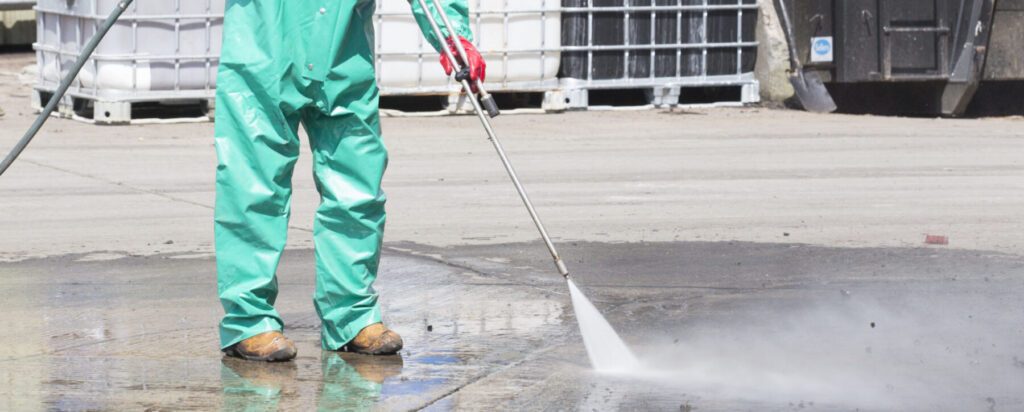
High pressure spray cleaning is done with the help of stationary or mobile sprayers. Usually, this method is used on floors, tanks, and containers or pipes.
Thanks to its high-pressure mechanics, this cleaning method is highly effective and doesn’t require much time.
Immersion Cleaning
As one of the most common and efficient methods, this method allows people to clean a range of irregularly shaped pieces.
The cleaning process varies depending on needs. In fact, there are even cases in which automated installations are created to clean specific parts or equipment. Manual immersion also exists.
This kind of cleaning is usually done at a temperature between 60 and 80ºC, and the application time depends on multiple variables.
Foam Cleaning
This cleaning method is used for hard-to-reach areas that can’t be reached with other industrial or commercial cleaning methods.
Foam cleaning consists of applying detergent to a machine or surface to create foam, which sticks to the surface and should be left for about 20 minutes. Doing this allows the chemical abrasion to do its job.
After the appropriate amount of time passes, a simple water rinse is all that’s needed.
When dirt is hard to remove with other cleaning methods, foam cleaning is often the best choice. With high abrasion pressure, this method is capable of removing dust, metal, and other particles.
Sandblasting
Sandblasting is used to clean surfaces of certain types of machinery and facades.
This method consists of shooting sand under a specialized high-pressure system and is capable of removing dirt from surfaces. In fact, thanks to its abrasion, this method is highly effective at removing grease, sand, and smoke stains.
In situ Cleaning
In situ cleaning needs to be done in the area you want to be cleaned. That makes this method ideal for cleaning pipes, tanks, ducts, and other areas that can’t be disassembled.
Industrial Cleaning Equipment to Achieve a Spotless Place
To achieve a spotless space, it’s not enough to clean just the surface. It’s also important to completely remove all dirt, dust, and hazards.
Industrial and commercial cleanings guarantee that every last speck of dirt is swept away, ensuring a spotless environment that’s safe for people. This is thanks to the equipment that workers use.
Pressure Washers & Steam Cleaners
A pressure washer is often used to effectively clean areas with difficult-to-clean places like brickwork, machinery, and vehicles.
For areas and machinery that has no access to a water supply, these tools are best because they blast a powerful jet of water onto areas. This helps to remove dirt and grime at high speed, which can then be cleaned up.
The water can be hot or cold, and cleaning fluid can usually be added if necessary.
For a deeper clean, some hot pressure washers also produce “wet steam.”
Dry Steam Cleaners
Sometimes, too much water can be a problem. For those situations, a dry steam cleaner is the perfect solution.
This cleaning tool can deep clean and sanitize, usually without chemicals, and are more eco-friendly. Unlike a mop, dry steam dries quickly, so it doesn’t create slippage or streaks.
Vacuum Cleaners
Vacuum cleaners are a universal cleaning tool and can be found at almost every kind of business.
For industrial use, this powerful suction device can be altered to suit certain types of floors. Other modifications allow vacuums to handle explosive and dangerous dust and other debris.
Industrial vacuums are typically stronger than personal vacuums, which guarantees an effective clean.
Carpet and Upholstery Cleaners
While vacuums are a great tool for daily cleaning on carpeted areas, a carpet/upholstery “extractor” is necessary for a really deep clean.
These cleaners spray a solution into the fabric and agitate it. This absorbs the dirt into the solution, which is then vacuumed up by the extractor.
Floor Sweepers
Floor sweepers are a great way to add a more polished look to surfaces.
This cleaning appliance spins a system of brushes against a surface, scrubbing off dirt. They come in a variety of sizes and can be either a ride-on or push-along.
It’s important to note that sweepers don’t use water and only rely on the pressure that the brushes apply. While some floor sweepers are fuel operated, there are battery-operated options that increase run time.
Floor Scrubber Dryers
Similar to sweepers, floor scrubber dryers use water and cleaning fluids to remove dirt with a system of rotating brushes.
After the dirt is removed, squeegees put pressure on the surface to dry the floor quickly. By doing this, the area is ready for use almost immediately.
Cleaners also have the option of utilizing portable scrubbers, which are useful for walls and other surfaces.
Rotary Floor Buffers and Polishers
Buffers and polishers are the perfect tools for hard floors.
Usually, these machines are smaller and nimbler, which makes them well-suited for schools, shops, warehouses, and other busy areas.
Fogging Machines
Foggers are traditionally used for odor and pest control and have gained immense popularity since COVID-19. These can also be used with sanitizing and disinfecting chemicals and can be used on all surfaces in a room.
What Types of Chemicals Are Used for Industrial Cleaning?
Alkaline-based cleaners are normally used for industrial cleaning.
Alkalis are soluble compounds that are derived from alkaline metals such as sodium, cesium, lithium, and more. Alkalis also have the unique ability to neutralize other chemicals and bacteria, especially hazardous ones.
Whether it’s cleaning walls or stripping floors, Alkaline cleaners are easily produced at different levels of strength, so they can be used for all sorts of applications.
Who Removes These Hazards?
Our industrial/commercial cleaning company has extremely skilled workers that are fully trained to remove these problem materials.
At Dallas Janitorial Services, our workers are also given plenty of on-the-job training on the use of special cleaners, hazard-removing machines, and safety training.
What Standards Are Used for Industrial Cleaning?
Although the standards can differ from state to state, industrial cleaning companies normally follow the standards of the Occupational Safety and Health Administration (OSHA).
OSHA is part of the US Labor Department. They ensure certain standards are met when dealing with work-related safety standards. Cleaning companies in at least 25 US states follow the OSHA standard. The other 25 states follow the federal safety standard, which is extremely similar to OSHA rules.
In other words, your business is in very safe hands.
How Do Businesses Operate While Getting All of This Cleaning Done?
Dallas Janitorial Services can work around nearly any type of business operating hours.
In most cases, you and your employees will not even notice we’re there. After initial contact, the cleaning company will be able to do a thorough inspection and then determine the best plan for you and your business.
Everything will be accomplished to prevent any disruption to your daily operations. It is possible to service buildings after hours or on weekends if needed. This is especially true for places such as schools.
FAQ on Types of Industrial Cleaning Service
What are the 3 types of cleaning?
The three types of cleaning are cleaning, sanitizing, and disinfecting.
Cleaning is above removing what’s visible to the eye, like dirt, dust, and debris. This is the first step in the overall process and focuses on removing the tangible obstacles.
Sanitizing is the next step and goes a bit deeper than regular cleaning. This focuses on killing bacteria and germs on a surface level and in a safe way.
The last level is disinfecting and is often the deepest level. This kind of cleaning kills current and future germs, making it very effective for high-risk areas.
What is an example of industrial cleaning?
An example of industrial cleaning is high-pressure washing, which is effective in cleaning areas where water has difficulty reaching.
This kind of cleaning helps loosen up existing dirt with a pressured blast of water, making the cleaning process easier.
What does industrial cleaning involve?
Industrial cleaning usually involves a team of people who do highly intensive work on top of the regular cleaning process. It may also include inspections and removing hazards.
What are commercial cleaning services?
Commercial deep cleaning services involve a team of cleaning specialists who work with a wide range of cleaning tools to sanitize multiple buildings like schools, stores, offices, and other buildings.
Why You Need Dallas Janitorial Services
If you live in the Dallas-Ft. Worth area, then you should get a professional cleaner such as Dallas Janitorial Services. We can put together the right services your business needs to stay safe and compliant.
We’ve been operating and serving the Dallas area since 2006, and we are also certified and bonded. Our industrial cleaning team can handle all sorts of jobs, big and small. We have the latest cleaning supplies and equipment to tackle your facility cleaning. Contact us so we can keep your business tidy, professional-looking, and, most importantly, safe for your customers and employees.