Everyone loves a clean workplace. It provides a great boost to your productivity, promotes optimal health, and improves the customer experience. The only downside for most office workers is the time investment. However, a few office cleaning tips from industry professionals can set your team up for success.
Working on everyday cleaning tasks while still being responsible for your typical duties and responsibilities can add unwanted stress for most office employees. Follow these 10 simple cleaning tips to make your space look great and smell fresh without feeling overwhelmed.
Proven Office Cleaning Tips That You Should Do
For a professional cleaning service such as Dallas Janitorial Services, cleaning can be simple and efficient with the proper structures in place. Our experience has allowed us to see what works and what doesn’t. Here are cleaning tips that all businesses should be aware of:
Designate a Cleaning Supply Area
Find a supply closet with open space or any accessible storage area to store your office cleaning supplies. Storing your cleaning supplies in one place lets you see what you may be running low on so you can replace it before you run out.
Also, keep an array of cleaners, dusters, and wipes on hand for quick cleanup tasks. Not having the proper cleaning supplies handy can make a small mess much harder to clean, especially if you forget about it while waiting for supplies to come in.
Prioritize Public Areas
Your workspace provides clients with their first impression of your business. Make sure to clean public areas, like your lobby, regularly. Sweeping and vacuuming in public spaces should be done at least once a week.
And pay special attention to your restrooms. A hot spot for grime and disease, the cleanliness of your restrooms can make or break a customer’s impression of your business. Devote special care to wiping down surfaces, cleaning toilets, and mopping floors. Your employees will appreciate it, too.

File Paperwork and Add Storage
Having adequate storage space for paperwork and office supplies is a smart and easy way to avoid clutter. Use filing cabinets and dividers to create a filing system for your paperwork. You can also use storage shelves to easily store bulky items like reams of paper or boxes of pens, staples, and paper clips.
The more paperwork and supplies you can store away neatly, the easier it is to bring in a commercial cleaning company like Dallas Janitorial Services to perform deep cleaning a few times a year.
Clean Your Desk Daily
At the end of the day, it’s a good habit to take the time to put all your pens, papers, and other desk supplies back in place. If need be, set an alarm a few minutes before the end of your day to give you the necessary time to clean your desk.
Not only does this keep your workspace clean and organized, but it also gives you a feeling of closure at the end of every day. Ultimately, this allows you to start fresh the next morning.
Dust High and Work Low
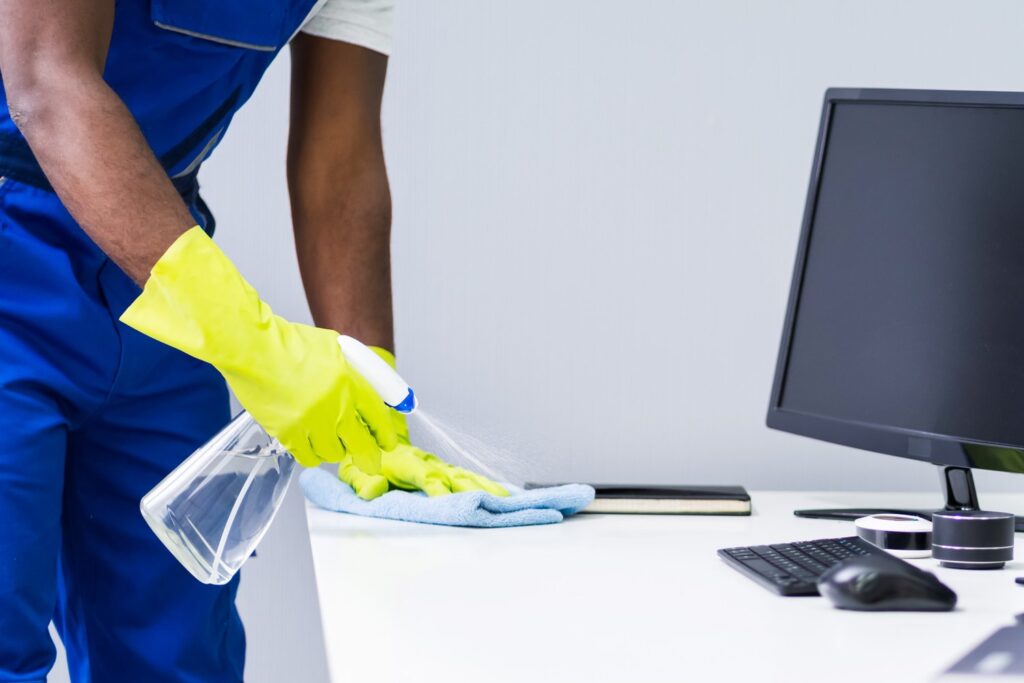
Dust accumulates quickly in hard-to-reach places, including the tops of bookcases and ceiling vents. Clean surfaces from the top down, starting with high shelves and corners where the wall meets the ceiling. Continue dusting all your surfaces down to the floor.
Pay special attention to areas behind desks and electronics, such as keyboards and computer monitors, as they are prone to attracting dust. If you keep plants to freshen the air, dust their leaves as you work through the office.
Manage Cords and Cables
Electronics and cords are prone to collecting dust, and unfortunately, cleaning dust off of a clutter of cords can be time-consuming and frustrating. Take the time to untangle and manage your cords and cables to make them easier to clean in the future. Also, when possible, keep them off of the floor to make vacuuming easier. Fix them in place on your desk or tie them together to open space to maneuver around them.
And any opportunity you find to eliminate cords, do it. Use wireless components, like monitors and keyboards, to reduce obstacles while cleaning your desk and cut down on dust traps.
Provide Enough Waste Baskets
Whether trash or recyclables, disposable clutter can accumulate quickly. It may seem simple, but strategically placing your waste bins in high-traffic areas and at every workstation can reduce your mess and promote productivity.
Disinfect High-Touch Surfaces
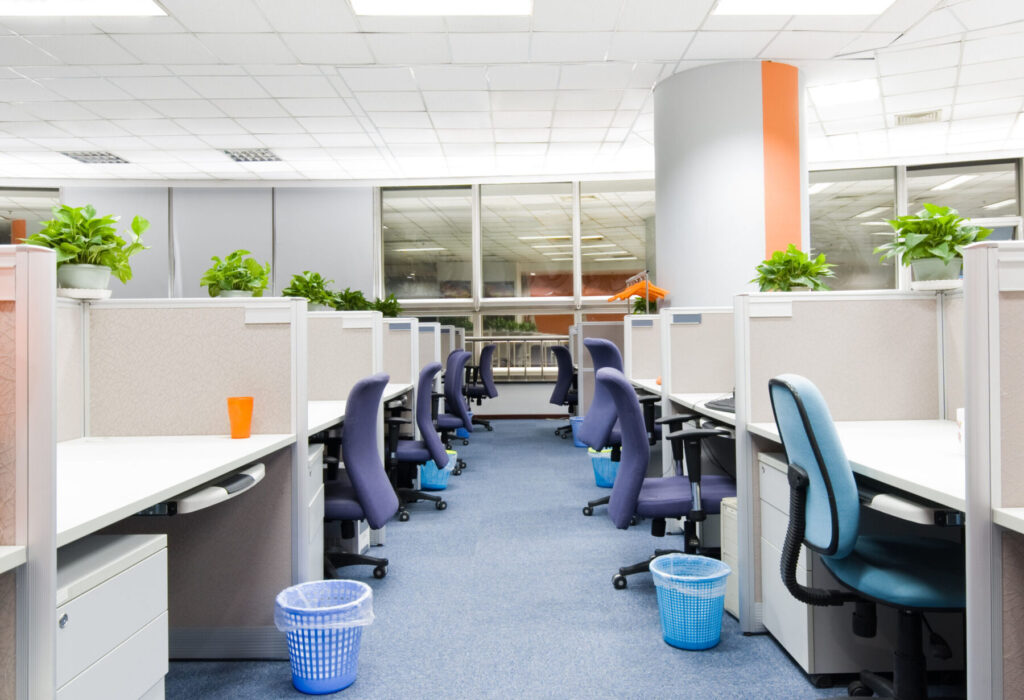
Disinfecting your high-contact surfaces is the most important aspect of any cleaning effort. Wiping down telephones, keyboards, desks, and other heavily used equipment with disinfecting wipes prevents the growth of bacteria and viruses, leading to a healthier and more productive workplace. For everyday spills, simple all-purpose cleaners can be used instead of disinfectants.
Add Floor Mats
Placing floor mats inside entrances helps capture most of the outside dirt or water before it’s tracked in. During winter or rainy weather, consider using longer mats to protect your employees. It will decrease the chance of workplace accidents by preventing slips due to water, ice, or snow. Plus, it will keep your floors dry, making cleaning easier.
Clean the Fridge and Small Appliances
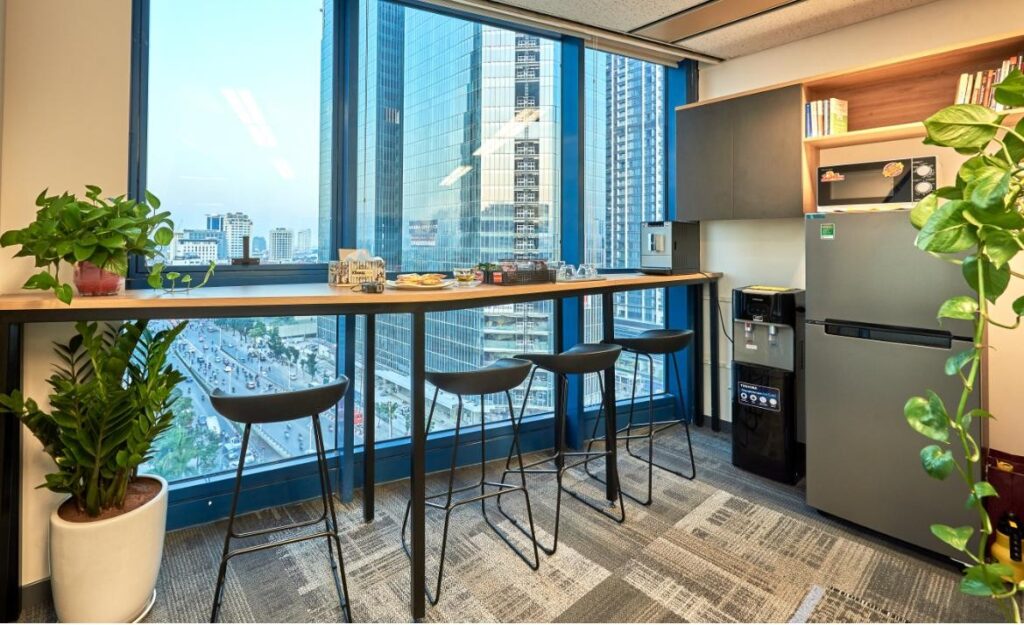
Often neglected, the refrigerator, microwave, and coffee pot in your breakroom are commonly some of the dirtiest parts of your office. Remnants of food and forgotten meals can attract pests, create off-putting odors, and facilitate mold growth.
Work up a rotation for weekly break room cleaning and ditch any expired food from the refrigerator. The refrigerator should be fully wiped clean once a month or more often, depending on how much it’s used. Using a simple solution of water and dish liquid or vinegar is effective in cleaning up interior spills.
These simple office cleaning tips are a great start to encouraging a productive and healthy atmosphere. They can easily be worked into your everyday routine and make cleaning more efficient over time.
To completely refresh the workplace, consider scheduling a monthly professional deep clean by Dallas Janitorial Services. Our expert technicians are versed in the most effective cleaning techniques and oft-overlooked areas. We use the highest-grade products and technologies, and our service comes with a 100% satisfaction guarantee.
Why Is It Important To Keep The Office Clean?
Maintaining a clean office is about more than just appearance. In the age of COVID-19, cleanliness is a way to keep the office safe and protected from potential bacteria and viruses. Here are some of the most important reasons to keep your office clean:
A Clean Office Gives A Good Impression
The impression you give to potential clients will be one of the most important catalysts in your professional relationship. The overall look of your office will be a determining factor in how clients, customers, or partners will view your brand and company. Whether you’re an owner or an employee, the look of your office may determine whether someone decides to continue with your company.
A clean office is also one that is odorless. Keeping smells out of your office provides a good impression for those who visit your office. If your office smells of an unclean area, on the other hand, it will create a bad impression and may be the factor that prevents customers or partners from signing on with you. Not only this but any scents in your office have a source that can attract pesky visitors like insects and pests.
Having a clean office will reflect your overall values, as well as the values of your brand or business. If you have a clean office, for example, this suggests that you are disciplined and that you value your image, as well as your clients’ opinion of you.
Clutter Free Workspace
An unclean office can cause significant feelings of stress for both employees and clients. This is due to several reasons; among them, an unclean office implies an unorganized office, which can cause files and paperwork to get lost. The atmosphere of your office will also be more stressful if it’s too cluttered or if it’s too dirty. This is partially due to the distractions that will be prevalent in an area that has things like food crumbs and unorganized paperwork.
Prevent Pests
This benefit of keeping an office clean extends to pest prevention. Offices that aren’t cleaned regularly can have several problems with pests and insects. This is because food and grime will collect, which will contribute to infestations of cockroaches and termites.
This will have a significant impact on the overall well-being of those visiting your office, like clients or partners, and on the well-being of your employees. The overall structure of your office can be affected by insects or termites because they will eat away at the foundation of the building. These pests can also cause damage to company assets, like computers and servers. Considering how expensive these products can be when broken, you may want to consider avoiding this altogether by keeping your office clean.
Improve The Air Quality
The air quality of your office will be affected by the cleanliness of it. When you don’t take the time to clean, this can cause a buildup of dust on surfaces and floors. For anyone who has asthma or other respiratory issues, this can be detrimental to their health.
Carpets are another example of places that can hold bacteria and dust. Over time, spores and particles can be released from this carpet and can be inhaled when people walk through your office. Not only this, but they can irritate the skin when touched or walked on.
A Safer Environment For Everyone
You and the other staff will be spending a large amount of time in the office. As such, you’ll be especially susceptible to the consequences of having a dirty workspace. You can, for example, notice a buildup of mold in the area because of humidity or bacteria. Should this happen, the following side effects are common: rashes, itchy skin, red eyes, lung problems like asthma, eczema breakouts, and even inflammation.
Cleaning your office will also prevent cross-infection during flu seasons when bacteria will be running rampant across the office. By keeping a clean office, you’ll ensure that the bacteria responsible for cross-examination will be eliminated. You will, then, be able to increase productivity because you’ll have fewer sick employees, and you’ll be able to prevent your employees from having to take sick leave.
The overall safety of your office is dependent on its condition. Services like office cleaners can ensure the overall safety of you and the other employees at your workplace. You may, for example, have wires hidden beneath clutter.
If there are any obstructions in halls or entrances, this can be a cause for concern. Anything that can cause injury should be removed promptly. Any injuries that occur at work will likely cause issues with insurance companies and will cause individuals to go on sick or disability leave. A sure way to avoid this is to simply remove the obstructions from paths that are commonly walked through.

More Office Cleaning Tips: How To Choose The Right Cleaning Materials?
Choosing the right cleaning supplies can make a major difference in the cleaning process. High-quality cleaning products can help to keep the space feeling and smelling great while eliminating unwanted germs. This section will discuss ways to ensure that you find the best products for your office space.
Research Before Buying
Ideally, any purchases you make for commercial purposes should be backed by thorough research. Since you’re spending your business’s valuable resources—it should not be in vain.
So, scour the internet. Read plenty of blogs like ours, and also look for reviews. Online reviews can be incredibly useful, and it’s important to remember that all products, especially the best and the worst ones, have plenty of reviews—consider them before you make a purchase.
Also, research the chemicals and other ingredients used in the cleaning products you’re choosing to ensure they work for your space and its requirements.
Find Cheaper Yet Effective Options
Businesses typically have pre-decided budgets for everything, including cleaning supplies. And no business wants to go all out on disinfectants.
That being said, there’s little point in investing in extremely low-quality products that cost cheaper but are hardly effective. Ideally, you should be looking for companies that are offering the best value at the best rates.
So, go for some high-end products if you need to, but make sure they have excellent results. You can also look into local options like ours since they’d cost you a lot less.
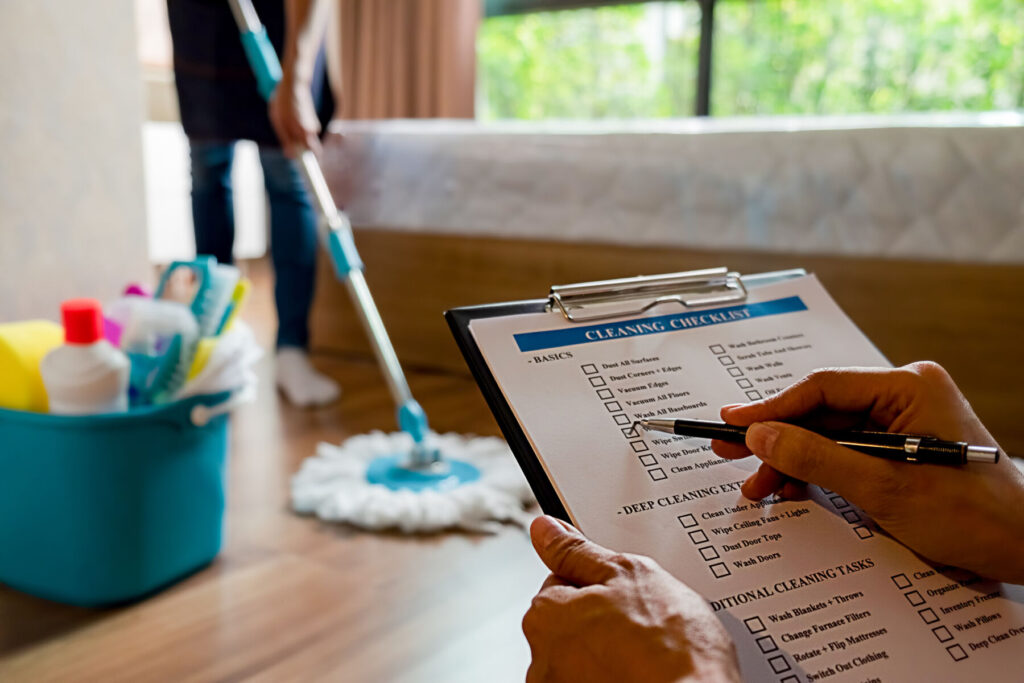
Go For Sustainable Products/Practices
Most cleaning products aren’t typically eco-friendly, but some of them are. This is why you may find them a bit on the steeper side, price-wise.
But going green may be worth it, especially if you’re looking for ways to play your part in conserving the environment as an organization.
It’s also a great way to make your business appear environmentally responsible, which can make a great impression on your clients and customers. Consumers are becoming increasingly environmentally conscious these days, so some of them may choose to associate with you for this reason alone.
Find Water-Based Products
You’ll come across two kinds of industrial cleaning products, mostly, some that are solvent-based and others that are water-based.
We suggest you choose water-based products for your business, especially if you have a lot of electronics that you’d be cleaning. Water-based cleaning solutions have a higher flashpoint which means they’re not likely to react to low heat levels, which makes them perfect for cleaning electronics like computers and other devices.
Moreover, water-based cleaners tend to be environmentally friendly too, and they cost less!
Always Go for The Odor-Free Options
If you want your business to smell clean and fresh, you’re better off with the fragrance-free options. Using cleaners with fragrance can backfire because everyone’s smelling sense is very different, and what may seem mild to you could be overpowering for others, which isn’t something you want your customers to experience. So, it’s best to stick with the odor-free options.
This is even more important if you’re in the food and beverages industry. You don’t want people to walk into your restaurant and feel nauseous because of your cleaning products, right?
So, make sure to choose products that have no strong fragrances or even chemical smells.

Invest in Cleaning Products/Equipment Only If Necessary
One of the biggest mistakes people make is that they treat all cleaning products the same way. When choosing cleaning products for a business, it’s important to remember that there are different types of solutions for residential use and commercial use. Make sure to go with the commercial or industrial options.
Commercial cleaners are much stronger and designed to disinfect hard surfaces. Some are also approved, especially for food processing use, while others are meant for healthcare facilities. Pick a commercial product best suited for your industry and its requirements.
Look for Products with Zero VOCs Or Allergens
When choosing cleaning products, especially for industrial use, finding ones without volatile organic compounds is important. This may even be a state requirement for your workplace, depending on which industry you’re in.
Moreover, you might want to check for any allergy-triggering ingredients or chemicals in the products you’re choosing. This is especially important if you have a business that several customers visit throughout the day. Go for the most neutral options you can find.
Hire An Office Cleaning Service
For many growing and thriving businesses, finding the time and effort to clean an office space can be difficult. Cleaning services such as Dallas Janitorial Services can make life for you and your employees much easier. Learn more about what we have to offer here.
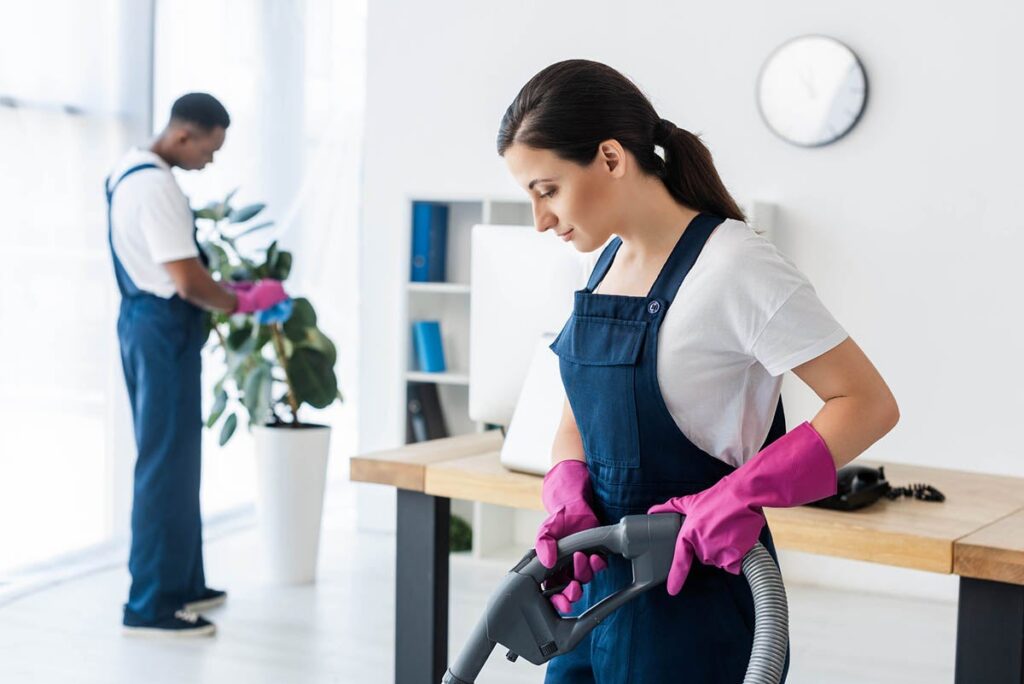
Why Is It More Practical To Hire Cleaning Services?
Many businesses believe that keeping their cleaning responsibilities in-house will be simpler and cheaper. Unfortunately, businesses often learn the hard way, and it takes a lot of energy and resources. Most people don’t enjoy cleaning, especially after others and more especially after an 8-hour working day. Businesses also fail to realize the cost of equipment and products that are necessary to maintain their space.
The following section will discuss the advantages of hiring a professional cleaning service to clean your office.
Employ experienced professionals: If you plan to task your employees with the job of cleaning your workplace, you will soon find many jobs incomplete or poorly done. The majority of employees don’t have the experience of cleaning large facilities or the knowledge of which equipment and products to use.
Precision Property Services commercial cleaners use the latest cleaning products, tools, and equipment on hand. On top of this, our cleaners offer years of experience and knowledge in commercial cleaning.
Making your employees clean after working each week isn’t how to build workplace morale. Unsurprisingly, employees aren’t fond of the expectation that they have to clean their workplace.
Reduce costs: Opting to outsource your cleaning services will significantly and immediately benefit your business. Our company provides all cleaning supplies and products, works efficiently to reduce cleaning time, and ensures excellent quality and standards. You won’t have to worry about damaged equipment during the cleaning process. Compared to the DIY approach, this is the far better option.
DIY office cleaning is an investment to start and maintain. From product and equipment costs to the hiring, selection, and trial period, the time, effort, and money involved in DIY office cleaning builds up quickly.
Add value to your business: Professional cleaning services source their supplies and equipment from quality wholesalers, getting the best products for the best prices. As professional cleaners come prepared with their equipment, upkeep, and maintenance are taken care of, and work can be completed without needing direction or liaison with your company. Delivering quality and efficiency increases the value of your business without putting a hole in the budget.
Convenience: Depending on your working hours, finding the energy to clean your workplace can take time and effort. Responsibilities build-up and cleaning can be overlooked, leading to slow, then immediate disorganization in the office. Professional cleaning companies can clean outside working hours, ensuring not disrupt workflow and keeping the office fresh for employees the following day.
Outsourcing professional commercial cleaning for your workplace will reduce overall costs and improve the overall environment of your business.
Refresh Your Workspace With Office Cleaning Services
At Dallas Janitorial Services, we understand the importance of a clean workspace. Our team has been dedicated to cleaning, sanitizing, and disinfecting workspaces and homes since 2006. We know that cleaning can be a hassle, especially when there’s work to be done. Our team of experienced and efficient cleaners finds the perfect time to clean the space without disrupting your workflow.
If you’re interested in scheduling an appointment with our professionals or would like more information on cleaning in your workplace, give us a call at (214) 788-3689 or click here to drop us a line. We’ll start with a free on-site consultation and create a custom cleaning solution that’s perfectly suited to meet your specific sanitization needs.

FAQ On Office Cleaning Tips
What is the most effective way to clean your office?
A few of the most effective ways to clean your office include emptying all trash and recycling, cleaning and sanitizing workstations and phones, cleaning door knobs, handles, and surfaces, and vacuuming/mopping floors.
How can I improve my office cleaning?
You can improve your office cleaning by disinfecting every day, minimizing clutter, and cleaning floors and carpets frequently. Another great way to make sure your office remains clean is to hire professional office cleaners such as Dallas Janitorial Services.
What is the fastest way to clean an office building?
The fastest way to clean an office building is to:
- Declutter
- Clean high-traffic areas
- Dust from the ceiling down to the floor
- Clean floors from the back to the front of the space
- Purchase and use versatile cleaning products
- Have a schedule and cleaning checklists available
How do you manage office cleaning?
Managing office cleaning starts with a cleaning schedule. Make sure that each person understands their role. Identify high-touch areas, don’t allow food in certain areas, make sure you have enough cleaning supplies, routinely inspect areas, and use electrostatic disinfection.
You can also hire a professional cleaning service to manage your office cleaning.