How long does it take to clean a hotel room efficiently while maintaining quality standards? Standard hotel room cleaning requires 20-45 minutes, depending on room size and checkout status. Professional hotel cleaning services optimize housekeeping workflows, achieving consistent quality while meeting daily quotas averaging 10-20 rooms per shift.
What Is the Standard Time to Clean a Hotel Room?
The standard hotel room cleaning time ranges from 20-30 minutes for stay-over rooms to 35-45 minutes for checkout rooms requiring complete linen changes. Housekeeping efficiency depends on room size, guest occupancy status, and the level of thoroughness required. Industry benchmarks demonstrate professional housekeepers maintain consistent cleaning quality while managing daily quotas, ensuring guest satisfaction and operational efficiency.
Why Hotel Room Cleaning Time Matters
Hotel room cleaning time directly impacts operational capacity, guest satisfaction, and revenue potential. Inefficient cleaning schedules reduce available inventory, preventing same-day check-ins and revenue opportunities. Research demonstrates cleanliness ranks as the primary complaint in negative hotel reviews, affecting reputation and booking rates.
Housekeeping time management balances speed with thoroughness, preventing quality compromises and endangering health standards. Rushed cleaning overlooks high-touch surface disinfection, spreading pathogens between guests. Systematic time allocation ensures proper attention to critical sanitation areas, maintaining public health standards intensified since COVID-19.
Understanding optimal cleaning timeframes helps hotel management establish realistic housekeeping quotas, preventing staff burnout. Sustainable workflows maintain consistent quality standards, protecting brand reputation. Professional hotel cleaning approaches incorporate proven time-management techniques, maximizing efficiency without sacrificing thoroughness.
Daily Hotel Room Cleaning Time Requirements
Daily hotel room cleaning time varies significantly between stay-over rooms and checkout rooms, requiring different service levels. Stay-over rooms occupied by continuing guests require 20-30 minutes covering bed-making, towel replacement, bathroom cleaning, and trash removal. Housekeepers maintain existing décor while refreshing essential amenities.
Check out room cleaning demands 35-45 minutes to complete comprehensive turnover services. These rooms require complete linen stripping, mattress inspection, deep bathroom sanitization, and thorough debris removal. Housekeepers verify all guest items removed while restocking supplies, preparing fresh occupancy.
Essential daily cleaning time allocation includes:
- Bed Making: Five to seven minutes removing and replacing all linens, inspecting mattress condition, and arranging pillows and decorative elements, creating a welcoming presentation.
- Bathroom Cleaning: Eight to twelve minutes scrubbing toilets, sinks, and showers, replacing towels and amenities, wiping mirrors and fixtures, and mopping floors with disinfectant solutions.
- High-Touch Surface Disinfection: Three to five minutes, systematically wiping door handles, light switches, TV remotes, thermostats, and telephones using EPA-registered disinfectants, eliminating pathogen transmission.
- Vacuuming and Dusting: Five to eight minutes, thoroughly vacuuming carpets, including under furniture, dusting all horizontal surfaces, and cleaning baseboards, removing allergen accumulation.
- Trash Removal and Supply Restocking: Two to four minutes emptying waste bins, replacing liners, replenishing toiletries, and verifying coffee supplies, ensuring complete guest amenity availability.
- Final Inspection: Two to three minutes conducting a systematic visual sweep, identifying missed areas, verifying all standards met, and confirming room readiness for occupancy.
Daily cleaning time consistency maintains baseline hospitality standards, preventing guest complaints and protecting facility reputation through predictable quality delivery.
Deep Cleaning Hotel Room Time Allocation
Deep cleaning hotel rooms requires significantly extended timeframes, addressing intensive maintenance beyond daily surface cleaning. Comprehensive deep cleaning demands two to four hours per room, depending on size and condition. Hotels typically schedule deep cleaning during low-occupancy periods or room rotation cycles.
Deep cleaning time allocation components:
- Carpet Steam Cleaning: Thirty to sixty minutes per room, treating carpet with hot water extraction, removing embedded dirt, stains, and allergens, requiring extended drying periods before guest occupancy.
- Upholstery Deep Treatment: Twenty to forty minutes per furniture piece, treating fabric chairs, sofas, and decorative cushions, removing absorbed contaminants and refreshing appearance.
- Mattress and Bedding Sanitization: Fifteen to thirty minutes deep cleaning mattresses using specialized equipment, inspecting for damage, and rotating or replacing deteriorating units, maintaining sleep quality standards.
- Bathroom Intensive Restoration: Forty-five to ninety minutes scrubbing grout lines, descaling fixtures, treating mold prevention areas, and polishing all surfaces, restoring original shine and sanitation.
- Wall and Baseboard Cleaning: Twenty to forty minutes washing walls, removing scuff marks and fingerprints, cleaning baseboards, and treating high-traffic damage areas, maintaining aesthetic quality.
- Window and Blind Deep Cleaning: Fifteen to thirty minutes washing interior and exterior glass, cleaning window frames and sills, and treating blinds or curtains, removing dust accumulation.
Deep cleaning time investment extends equipment lifespan while maintaining premier hospitality standards, justifying operational disruption through enhanced guest experiences and reduced replacement costs.
Variation by Facility Type
Hotel room cleaning time requirements vary significantly based on facility classification, service level expectations, and guest demographic patterns, requiring customized housekeeping approaches.
Luxury Hotels: Require extended cleaning time averaging 45-60 minutes per room, maintaining premium standards. Enhanced attention to detail includes decorative element arrangement, premium amenity presentation, and white-glove inspection protocols meeting elevated guest expectations.
Business Hotels: Optimize cleaning time efficiency, targeting 25-35 minutes per room, balancing quality with high turnover demands. Streamlined processes prioritize functionality over decorative presentation, supporting business traveler preferences for consistency and convenience.
Extended-Stay Properties: Allocate variable cleaning time based on guest-selected service frequency. Weekly cleaning services require 60-90 minutes to complete comprehensive kitchen cleaning, multiple-room treatment, and restocking extended-stay supplies, accommodating residential-style occupancy patterns.
Budget Accommodations: Implement efficient cleaning protocols, completing rooms in 20-25 minutes, focusing on essential sanitation and functionality. Simplified amenity packages and standardized layouts enable rapid turnover, maintaining affordable pricing while meeting baseline cleanliness expectations.
Factors Affecting Hotel Room Cleaning Time
Multiple operational variables impact actual hotel room cleaning time, creating scheduling complexities requiring flexible housekeeping management approaches.
Room size significantly affects cleaning duration, with standard rooms requiring baseline timeframes while suites demand proportionally extended periods. Additional square footage multiplies the surface area requiring attention. Multiple bathrooms, kitchenettes, and separate living spaces compound cleaning complexity.
Guest occupancy patterns influence cleaning intensity and duration. Extended stays accumulate greater debris and require more thorough attention. Business travelers typically maintain neater rooms than leisure groups with children. Special events or conventions create predictable cleaning challenges requiring adjusted time allocations.
Housekeeping experience level directly correlates with cleaning speed and quality consistency. Newly trained staff require 50-100% additional time completing standard protocols. Experienced housekeepers develop efficient movement patterns and quality shortcuts, maintaining standards while meeting quotas. Ongoing training sustains performance, preventing quality deterioration.
Equipment quality and availability impact cleaning efficiency and completion time. Modern vacuum systems clean faster than aging equipment. Adequate supply cart organization reduces time wasted retrieving materials. Proper chemical selection ensures effective disinfection without requiring multiple applications.
Housekeeping Workload and Daily Quotas
Housekeeping daily quotas balance operational needs with sustainable staff workload, preventing burnout while maintaining service consistency. Industry standards typically assign 10-20 rooms per eight-hour shift, depending on facility type and cleaning thoroughness requirements.
Luxury properties assign 10-14 rooms daily, allowing extended attention per room. Business hotels typically quota 14-18 rooms, balancing efficiency with quality maintenance. Budget facilities may assign 18-20 rooms requiring streamlined processes, maintaining baseline standards.
Quota calculations incorporate cleaning time variability, allocating buffer capacity for unexpected challenges. Checkout rooms receive priority scheduling, ensuring afternoon check-in availability. Stay-over rooms are distributed throughout shifts, maintaining a consistent workflow and preventing end-of-day rushes.
Team-based approaches optimize housekeeping productivity by pairing experienced staff with newer employees. Specialized roles like bathroom-only cleaners or bed-making specialists enable task segmentation, improving overall efficiency. Cross-training maintains operational flexibility, accommodating staff absences or demand surges.

Professional Hotel Cleaning Time Optimization
Professional hotel cleaning services optimize operational efficiency through specialized training, commercial-grade equipment, and systematic workflow design. Expert teams complete standard room cleaning 20-30% faster than in-house staff while maintaining superior quality consistency. Understanding the benefits of outsourcing cleaning services helps hotel management make informed staffing decisions.
| Cleaning Task | In-House Time | Professional Time | Efficiency Gain |
| Checkout Room | 40-50 minutes | 30-35 minutes | 25-30% faster |
| Stay-Over Room | 25-35 minutes | 18-25 minutes | 25-30% faster |
| Deep Cleaning | 3-4 hours | 2-3 hours | 30% reduction |
| Bathroom Sanitization | 10-15 minutes | 7-10 minutes | 30-35% faster |
| Quality Inspection | Self-reported | Third-party verified | Documented compliance |
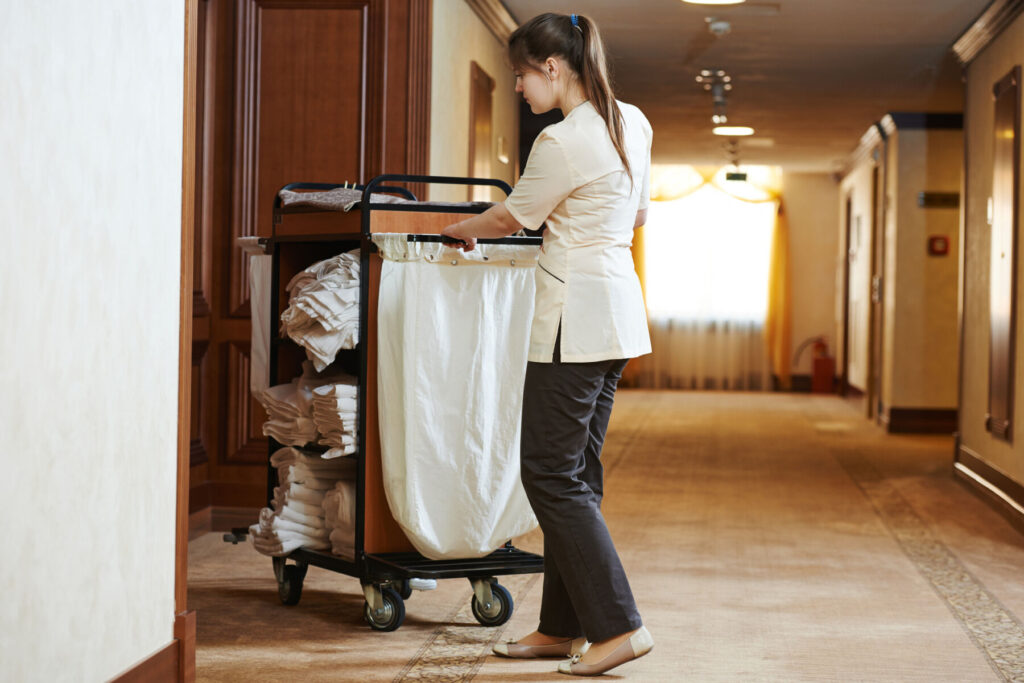
Professional services implement proven time-management protocols developed through thousands of room cleanings. Specialized equipment like backpack vacuums and ergonomic carts reduces physical strain, enabling sustained productivity. Standardized cleaning sequences eliminate decision-making delays, maintaining consistent pacing.
Outsourced cleaning partnerships provide operational flexibility, scaling capacity matching seasonal demand fluctuations. Peak periods receive supplemental staffing, preventing backlog accumulation. Off-season adjustments reduce fixed labor costs while maintaining core capabilities.
High-Touch Surface Disinfection Time Requirements
High-touch surface disinfection requires dedicated time allocation, ensuring proper chemical contact periods, eliminating pathogen transmission. Rushed disinfection compromises public health protection, creating liability exposure for hospitality operators.
EPA-registered disinfectants specify minimum wet-contact times ranging from 30 seconds to 10 minutes, depending on target pathogens. Housekeepers must allow surfaces to remain visibly wet throughout contact periods. Premature wiping negates antimicrobial effectiveness, requiring repeat applications, wasting time and materials.
Critical high-touch surfaces requiring systematic disinfection include door handles, light switches, TV remotes, thermostat controls, telephone handsets, desk surfaces, chair arms, and bathroom fixtures. Comprehensive coverage demands three to five minutes per room following proper application protocols.
Post-pandemic heightened awareness elevated disinfection priority in guest expectations and regulatory requirements. Hotels implementing documented disinfection protocols demonstrate commitment to guest safety. Time investment in proper disinfection prevents outbreak incidents, protecting reputation and preventing operational shutdowns.
Technology Integration in Cleaning Time Management
Technology integration transforms hotel cleaning time management from manual scheduling to data-driven optimization systems. Digital platforms track individual room completion times, identifying efficiency patterns and training opportunities.
Mobile applications enable real-time status updates, eliminating communication delays between housekeeping and front desk operations. Management dashboards display live progress toward daily quota completion. Predictive analytics forecast completion times, enabling proactive check-in scheduling, maximizing revenue capture.
Automated quality verification systems reduce inspection time while improving consistency. Photo documentation creates accountability evidence supporting training initiatives. Guest feedback integration identifies recurring cleanliness issues requiring process adjustments or additional training focus.
IoT sensors monitor supply inventory levels, triggering automated reorder processes. Smart carts track movement patterns, identifying inefficient layouts or supply placement. Data analytics reveal optimal cleaning sequences, reducing wasted motion and improving time utilization.
Training Impact on Hotel Room Cleaning Speed
Training significantly impacts hotel room cleaning speed and quality consistency. Comprehensive initial training requires 40-80 hours to establish baseline competency. Structured programs covering cleaning chemistry, safety protocols, and quality standards prepare staff for independent performance. Avoiding common commercial cleaning mistakes through systematic training prevents quality compromises and time waste.
Ongoing training maintains performance, preventing quality erosion and accommodating evolving standards. Regular refresher sessions reinforce proper techniques, addressing common shortcuts compromising results. Advanced training introduces specialized equipment and techniques, improving efficiency without quality sacrifice.
Standardized cleaning sequences eliminate decision paralysis, maintaining consistent pacing. Documented procedures provide reference materials supporting new hires and reinforcing established protocols. Visual aids and laminated guides offer quick reference, preventing time waste.
Mentorship programs pair experienced housekeepers with trainees, accelerating skill development. Observed demonstrations reinforce proper techniques, correcting errors before habit formation. Performance feedback identifies specific improvement opportunities targeting training investments for maximum impact.
Get Professional Hotel Room Cleaning Time Optimization from Dallas Janitorial Services
Optimizing hotel room cleaning time protects guest satisfaction while maintaining operational efficiency and staff sustainability. Systematic time management prevents quality compromises, threatening reputation and health standards. Dallas Janitorial Services brings decades of hospitality facility expertise to Dallas-Fort Worth hotel operators. Contact us today at 214-778-3689 for a customized hotel cleaning time assessment and workflow optimization.
Frequently Asked Questions About Hotel Room Cleaning Time
How long should it take to clean a checkout hotel room?
Check out hotel room cleaning requires 35-45 minutes, completing comprehensive turnover services including complete linen removal, mattress inspection, deep bathroom sanitization, and thorough debris clearing. Additional time addresses exceptional situations like extended stays or intensive use requiring enhanced attention. Professional services optimize workflows, completing checkout rooms 25-30% faster than in-house staff while maintaining superior quality standards and consistent guest satisfaction.
How long does hotel deep cleaning take?
Hotel deep cleaning requires two to four hours per room, depending on size and condition, addressing carpet steam cleaning, upholstery treatment, bathroom intensive restoration, and wall cleaning. Hotels schedule deep cleaning during low-occupancy periods or room rotation cycles, minimizing revenue impact. Extended timeframes accommodate drying periods for carpet and upholstery treatments, preventing premature guest occupancy. Professional deep cleaning services optimize timing through specialized equipment and systematic workflows.
How many hotel rooms can a housekeeper clean per day?
Housekeepers typically clean 10-20 rooms per eight-hour shift, depending on facility type and service level requirements. Luxury properties assign 10-14 rooms daily, allowing extended attention, while budget facilities may assign 18-20 rooms, requiring streamlined efficiency. Quota calculations balance operational needs with sustainable workload, preventing staff burnout. Team-based approaches and specialized roles optimize overall productivity, maintaining quality consistency across daily assignments.
What factors affect hotel room cleaning time?
Hotel room cleaning time varies based on room size, guest occupancy patterns, housekeeping experience level, and equipment quality. Larger rooms and suites require proportionally extended periods. Extended stays accumulate greater debris, demanding additional attention. Experienced housekeepers complete tasks 50-100% faster than newly trained staff. Modern equipment and adequate supplies reduce time waste. Professional services optimize these variables through systematic training, commercial-grade equipment, and proven workflow design.
How long does high-touch surface disinfection take in hotel rooms?
High-touch surface disinfection requires three to five minutes per hotel room following proper EPA-registered disinfectant application protocols. Chemical contact times range from 30 seconds to 10 minutes, depending on target pathogens, requiring surfaces to remain visibly wet throughout periods. Critical surfaces include door handles, light switches, TV remotes, thermostats, telephones, and bathroom fixtures. Proper disinfection time investment prevents pathogen transmission, protecting guest health and facility reputation while meeting post-pandemic safety expectations.