For guests, hotel cleanliness is often the most important factor when choosing where to stay. A dirty hotel lobby or, worse, a dirty hotel room can instantly scare guests away. Negative online reviews about dirty or disorganized hotel rooms can be very bad for business.
The challenges of maintaining a clean hotel are numerous. With dozens of rooms, common areas, and occasionally pools or gyms, there are a lot of unique cleaning tools and procedures required. With guests coming and going at all hours, it can also be difficult to find the time to clean everything. Hotel cleaning is a 24/7 job that cannot be ignored.
With more rigorous cleaning and sanitization standards in place in the aftermath of the pandemic, hotel cleaning isn’t getting easier. This is why it is more important than ever to use professional cleaning services when operating a hotel. Professional cleaning services offer deep cleaning that housekeeping staff simply aren’t equipped to deal with.
How exactly do professional cleaning services add value to hotels? And what steps need to be taken when cleaning hotel rooms? This guide will cover everything you should know about how to clean a hotel.
Why Having Hotel Cleaning Services Is Essential
A hotel’s housekeeping staff has a lot of work on their plate. On average, it takes about 45 minutes to fully clean a single hotel room. That averages out to roughly 10 rooms cleaned per shift in ideal conditions. Even with all of that work, there is simply a lot that the housekeeping staff cannot do.
Hotels present several unique cleaning challenges compared to other businesses. For one, guests are coming and going at all hours of the day. Second, guests may be arriving from all over the world, meaning there is a greater chance for others to get sick. Third, hotels have an incredibly high volume of rooms, many of which require unique cleaning methods.
Having a clean hotel is already a top priority when it comes to guest satisfaction. But it is also incredibly important for health and safety reasons. Common areas, like lobbies and gyms, need to be disinfected regularly. Floors also require regular cleanings to maintain appearance.
Hotel cleaning services ensure that hotels have access to all the cleaning supplies and expertise needed to handle these challenges. Professional cleaning services offer an excellent return on investment for all types of businesses, hotels in particular. These cleaning services reduce the burden on housekeeping staff members while also delivering better and more consistent results.
7 Filthy Common Spaces Inside A Hotel
When most people think of hotel cleaning, they likely think of clean rooms first. But part of the difficulty of cleaning a hotel is that there is much more to it than guest rooms. Hotel common areas also demand regular attention and cleaning.
Here are several of the most important areas to clean in any hotel.
Hotel Front Desks
The first place guests go upon arrival is the front desk. This is where hotels can make their first impression on each visitor. A clean and organized front desk sends the right message and lets guests know they are in good hands. On the other hand, a messy front desk is a red flag. Even if everything else is clean, if the front desk itself is a mess, customers might form a negative opinion right away.
Hotel Lobbies
Extending beyond the front desk, hotel lobbies are similarly important. Guests will pass through the lobby regularly throughout their stays. Keeping this area clean, organized, and well-lit provides comfort for guests. The lobby can also be one of the most difficult areas to clean, however. A hotel lobby is always open and might have people passing through it every hour of the day. Carpeted hotel lobbies can be particularly challenging. Picking a time of day with light foot traffic is key when it comes to knowing how to clean a hotel carpet.
Gyms
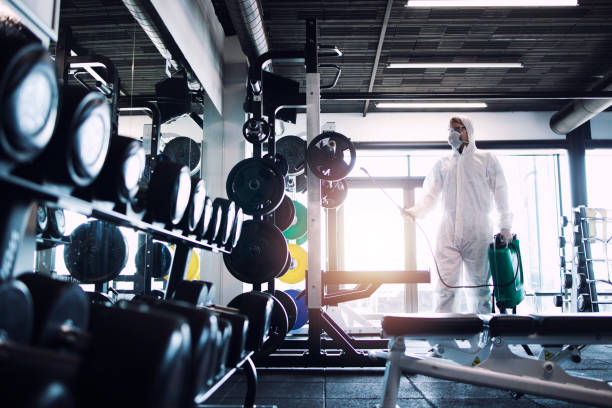
Thanks to the COVID pandemic, cleaning hotel gyms has become an even greater point of emphasis. Gym equipment needs to be properly sanitized regularly. In addition, the gym walls and floors also need regular cleaning.
Guest Rooms
Of course, the rooms that need the most attention are hotel bedrooms. See below for a detailed guide on how to clean a hotel room step-by-step. The importance of a clean hotel bedroom, cannot be understated. This is where guests will be spending the majority of their time and is often the most important aspect of their stay. Moreover, this is where high-touch surfaces, like light switches and remote controls, often reside.
Bathrooms
Most hotels clean guest bathrooms daily, even if guests aren’t checking out. This is because bathrooms don’t take very long to build up dirt, mold, and mildew. Knowing how to clean a hotel bathtub is one of the most important parts of a housekeeper’s job. But the entire bathroom requires regular cleaning and disinfecting.
Pool Area
Public pool areas, like gyms, require consistent cleaning and disinfecting. Cleaning the pool itself requires a bit of work. This is typically where hotel guests leave behind their dirty towels, too. Properly treated water is essential to prevent the spread of water-borne illness. But the surrounding area also needs to be cleaned daily. This includes floors and any furniture in the pool area.
Elevators
Perhaps the easiest common area to overlook in a hotel is the elevators. But cleaning staff should never neglect elevators. Disinfecting the elevator buttons and walls, and occasionally vacuuming the floors, go a long way toward maintaining a clean and safe hotel environment.

How Management Keeps Their Hotel Clean
As you can see, there is a lot that goes into keeping a hotel clean. As a result, most hotels rely on multiple cleaning teams to keep all the spaces clean. The housekeeping staff is responsible for overseeing all guest rooms and that nothing from a previous guest is left behind. To help housekeeping perform at its best, hotels typically rely on other departments or cleaning services to keep common areas clean.
6 Steps to Follow When Cleaning Hotel Guest Rooms
Want to know how to clean a hotel room like a professional? There are several steps involved, including many that might not be obvious right away. For example, wiping down light switches and remote controls is a crucial, but often overlooked, cleaning step.
Here are some of the most important steps that cleaners should follow when cleaning a hotel bedroom after a previous guest.
Start by Changing the Bed
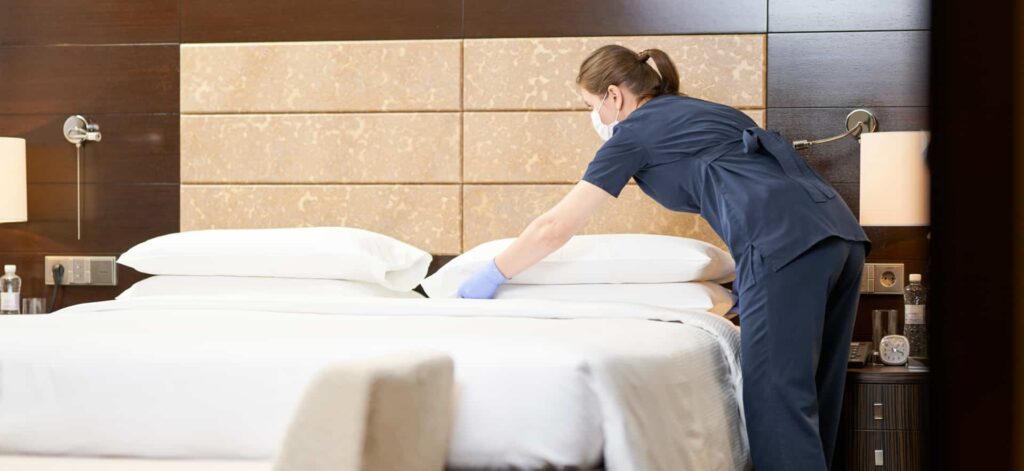
After the previous guest has left, the first thing to do is to remove all of the bedding. Remove all sheets, blankets, and liners. During this process, cleaners should also inspect the mattress and bedframe for any damage or stains. If everything looks good, replace the linens with fresh sheets for the next guest.
Empty Trash Bins
Next, dispose of any trash left behind by the previous guest. Most housekeeping staff carry a large trash bin with them as they work to quickly and easily dispose of garbage. Replace the trash bags in all of the bins, and check the floors for additional trash before moving on.
Dust Every Surface
Dusting is important every day in hotel rooms, even if there’s only a small amount of dust. Small clumps of dust will stand out even if the room is otherwise clean. This will give guests a bad impression. Be sure to get all surfaces: desks, tables, countertops, TV stands, nightstands, etc.
Vacuum Floors, Carpets, and Furniture
Like dusting, vacuuming each day is essential because it prevents small messes from building up. Vacuuming also presents a chance to inspect the carpet and furniture for stains or other damage. A handheld vacuum cleaner that can also clean the furniture is preferable for the housekeeping staff. Hotel vacuum cleaners should also be maneuverable so that they can get underneath the furniture and into corners.
Clean Bathroom
Of course, the bathroom needs to be cleaned each day as well. Housekeepers should start by removing and replacing any dirty towels. It’s also important to wipe down any surfaces in the bathroom. Particularly, the sink, countertops, mirror, and shower. Housekeepers should also take this opportunity to make sure the sink and shower are getting enough hot water. While plumbing issues are not housekeeping’s responsibility, any hot water issues should be reported to hotel management.
Wipe and Disinfect High-Touch Surfaces
The last step to cleaning a hotel bedroom is to wipe down all high-touch surfaces. This means fixtures like light switches, TV remote controls, refrigerator doors, door handles, and faucets. Guests frequently make contact with all of these surfaces. As a courtesy and precaution, hotel cleaning staff should disinfect all of these high-touch surfaces each day.
Having Professional Deep Cleaning Services for Your Hotel
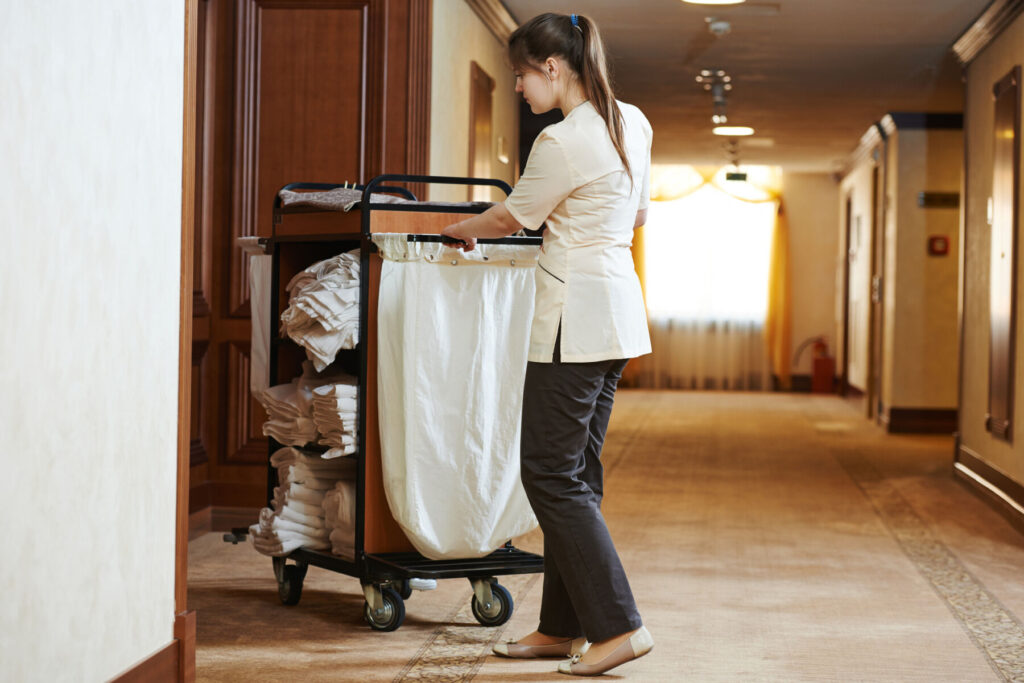
Day-to-day cleaning of hotel rooms typically falls to the housekeeping staff. But deep cleaning is not the responsibility of housekeeping. Instead, many hotels rely on professional cleaning services for these additional tasks.
Given the importance of maintaining a clean hotel, the return on investment for professional cleaning services is unbeatable. Professional cleaners have the knowledge and cleaning supplies needed to handle everything required for a clean hotel. Professional cleaning services like Dallas Janitorial are not just well-equipped. We are also reliable, accountable, and flexible.
What Are The Prices for Hotel Cleaning Services?
The cost of cleaning services varies based on the type of cleaning being performed and how large the area is. On average, it costs about $10 per room when cleaning hotel bedrooms. However, the cost of professional cleaning services varies depending on the services needed. However, businesses should always get a quote and discuss costs with their cleaning company before scheduling a service.
Frequently Asked Questions
What are the 5 standards of housekeeping?
The five standards or 5 S’s of good housekeeping are Sort, Set in Order, Shine & Clean, Standardization, and Sustain.
How do hotels clean checklists?
Change the sheets, make the bed, check for items underneath furniture, dust, vacuum, clean the wardrobe or closet, and wipe down high-touch surfaces like light switches or remote controls.
Which room should be cleaned first in the hotel by law?
There is no law dictating which rooms are cleaned first in a hotel. Hotel cleaning staff tries to honor guest requests for early cleaning before others if there are any.
How many rooms can a housekeeper clean per day?
Hotel guest rooms take about 30 to 45 minutes to clean, with many housekeepers working 8-hour shifts. Therefore, on average, a single housekeeper can clean around 12 to 16 rooms per day.
What are the policies for cleaning hotels?
Each hotel sets its own cleaning policies. Most hotels strive to be as clean as possible while using safe, non-abrasive cleaning supplies.
Could Your Hotel Cleaning Standards Be Improved?
Few industries prioritize cleanliness as much as hotels do. As such, hotel cleaning is one area that no business owner should neglect. And with so many rooms to clean in a hotel, this job cannot be taken lightly.
If you are in need of professional hotel cleaning services, Dallas Janitorial Services can help. Dallas Janitorial is one of the Dallas-Fort Worth area’s most trusted cleaning companies, offering a range of cleaning services for many industries. Contact us today to get a free quote for our professional hotel cleaning services.